Ultrasonic Nose Job – The Less Invasive Rhinoplasty
Rhinoplasty has always been one of the most precise procedures in facial plastic surgery. The nose sits at the centre of the face, influencing balance, expression, and even how light falls across facial features. Small adjustments can dramatically change overall harmony, which is why patients researching rhinoplasty surgery in Delhi often look for techniques that promise accuracy with minimal trauma.
In recent years, one term has begun appearing more frequently during consultations: ultrasonic rhinoplasty, often called the ultrasonic nose job.
The name sounds technological, almost futuristic, but the real value of this technique lies in something very simple. It allows surgeons to reshape nasal bones with greater control while reducing unnecessary damage to surrounding tissues.
Understanding how ultrasonic rhinoplasty works and how it differs from traditional methods helps you determine whether it is truly a better option or simply a newer label for the same surgery.
What is an Ultrasonic Nose Job?
An ultrasonic nose job is an advanced form of rhinoplasty that uses specialised ultrasonic instruments to reshape nasal bones instead of conventional surgical tools such as chisels or rasps.
These instruments operate using controlled ultrasonic vibrations that act only on hard bone while preserving nearby soft tissues, blood vessels, and skin structures.
In traditional rhinoplasty surgery in Delhi, bone reshaping is performed manually. While effective, it can sometimes create wider tissue disruption because mechanical force is required to adjust bone position.
Ultrasonic rhinoplasty changes this interaction between tool and tissue.
Instead of breaking bone through impact, the surgeon gently sculpts it with precision energy.
What this really means for patients is:
- more controlled bone reshaping
- reduced trauma beneath the skin
- potentially less swelling and bruising
- improved surgical accuracy in delicate areas
The goal is not to make rhinoplasty easier, but to make it more refined.
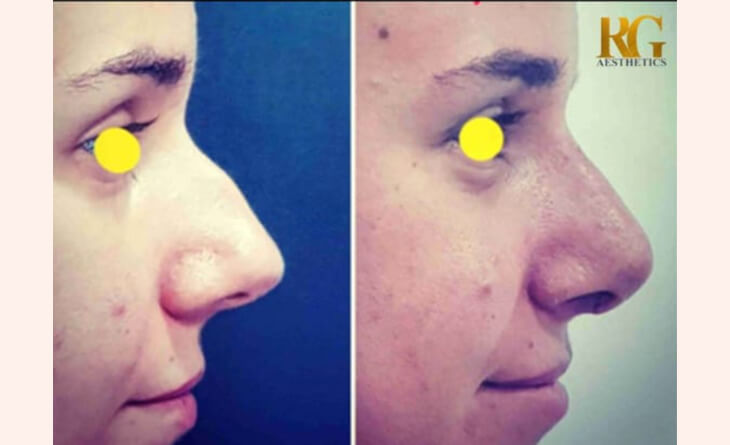
Have questions or want to get started? We are ready to help you with a smile!
How Ultrasonic Rhinoplasty Works (Piezosurgery Technology)
Ultrasonic rhinoplasty relies on a system known as Piezosurgery rhinoplasty, a technology originally developed for delicate bone procedures in other surgical fields.
The specially used piezotome device produces micro-vibrations that selectively affect mineralised tissue while leaving soft tissues largely undisturbed.
During surgery, the cosmetic surgeon in Delhi uses fine ultrasonic tips to:
- reshape nasal bones gradually rather than fracture them abruptly
- smooth irregularities with sculpting precision
- refine asymmetries under direct visual control
- protect the surrounding vessels and mucosal lining
Because soft tissues remain more intact, the body experiences less inflammatory response after surgery.
Patients often notice that recovery feels different, not painless, but calmer and more predictable.
How Ultrasonic Rhinoplasty Differs from Traditional Rhinoplasty
Both techniques aim to achieve the same aesthetic and functional goals. The difference lies in how the structural changes are performed.
Traditional rhinoplasty relies on mechanical instruments that reshape bone using controlled force. Experienced surgeons achieve excellent outcomes with these methods, but they inherently involve more tissue disturbance.
Ultrasonic rhinoplasty introduces a more selective approach.
Key distinctions include:
- bone sculpting with the help of piezotome instead of bone breaking in many cases
- improved visual precision during surgery
- reduced surrounding tissue trauma
- smoother bone edges after reshaping
- potentially quicker early-stage nose surgery recovery
It is important to understand that ultrasonic technology does not replace surgical expertise. The outcome still depends primarily on planning, anatomical understanding, and the surgeon’s judgment.
Technology refines execution. It does not substitute experience.
Who is a Good Candidate for Ultrasonic Rhinoplasty?
Not every patient automatically benefits from ultrasonic techniques. Suitability depends on anatomy and surgical goals.
Ultrasonic rhinoplasty is particularly useful when:
- nasal bones are uneven or asymmetric
- precise dorsal refinement is required
- delicate contour adjustments are planned
- revision rhinoplasty demands controlled correction
- patients wish to minimise bruising where possible
During consultation for rhinoplasty surgery in Delhi, evaluation focuses on skin thickness, bone structure, breathing function, and facial proportions rather than simply choosing the newest technique.
The best approach is always the one that matches your anatomy.
The Surgical Procedure: Step-by-Step Overview
Although the technology differs, the overall surgical journey remains familiar.
Pre-operative Planning
Before surgery, a detailed facial analysis determines structural goals. Digital imaging may assist discussion, but final planning relies on anatomical assessment rather than simulation alone.
Anaesthesia and Access
Surgery is typically performed under general anaesthesia. Depending on complexity, either open or closed rhinoplasty techniques may be used.
Ultrasonic Bone Sculpting
This is where the procedure differs most visibly.
Using ultrasonic instruments, the surgeon reshapes nasal bones gradually, allowing controlled refinement rather than abrupt repositioning.
Long-sentence surgical principles guiding this stage include:
- maintaining structural stability while altering contour
- preserving soft tissue attachments whenever possible
- creating symmetrical bone transitions that heal naturally
- avoiding excessive manipulation that may prolong recovery
Cartilage Refinement
Cartilage adjustments are still performed using traditional surgical techniques because ultrasonic tools primarily target bone.
Closure and Support
The nose is stabilised with splints, and patients enter the recovery phase.
Recovery After an Ultrasonic Nose Job
Recovery remains one of the most discussed aspects of rhinoplasty, and expectations should remain realistic.
Ultrasonic rhinoplasty does not eliminate recovery. It simply aims to make healing more controlled.
Patients undergoing Rhinoplasty Surgery in Delhi with ultrasonic techniques may experience:
- reduced bruising around the eyes in many cases
- swelling that settles more gradually and evenly
- less early discomfort related to bone trauma
- earlier confidence returning to social settings
Typical healing progression includes:
- First week: swelling, nasal congestion, splint support
- Weeks two to four: visible improvement begins
- Three months: significant refinement becomes noticeable
- Six to twelve months: final definition develops
Internal healing continues long after external swelling improves, which is true for all rhinoplasty methods.
Advantages of Ultrasonic Rhinoplasty
Patients are often drawn to ultrasonic rhinoplasty because of its precision-driven philosophy.
Meaningful benefits may include:
- enhanced sculpting accuracy for nasal bones
- smoother contour transitions
- reduced risk of irregular bone edges
- potentially faster early nose surgery recovery
- improved surgeon control in complex cases
However, results still depend on thoughtful planning by an experienced cosmetic surgeon in Delhi, not technology alone.
Are There Any Limitations?
Ultrasonic rhinoplasty is not automatically superior in every situation.
Considerations include:
- longer surgical learning curve for surgeons
- slightly increased operating time in some cases
- not all nasal corrections require ultrasonic tools
A responsible surgeon chooses technique based on necessity, not marketing appeal.
Safety Considerations
Safety in rhinoplasty surgery in Delhi depends far more on surgical planning than instrument choice.
Ultrasonic technology contributes to safety by allowing controlled bone modification, but overall outcomes rely on:
- accurate diagnosis
- airway preservation
- balanced structural support
- careful post-operative monitoring
Patients benefit most when technology is integrated into sound surgical judgment.
Why Technique Selection Should Be Individualised?
The growing popularity of ultrasonic rhinoplasty sometimes creates the impression that traditional rhinoplasty is outdated. This is not accurate. Both approaches remain valid.
The real question is not Which technique is best? but rather: Which technique is best for your nose?
An experienced surgeon evaluates facial proportions, breathing function, skin behaviour, and long-term stability before recommending a method.
This personalised planning defines successful rhinoplasty surgery in Delhi far more than any single device.
A Thought Before You Decide
Choosing rhinoplasty is rarely about changing how you look overnight. It is about aligning facial harmony with how you already see yourself.
Ultrasonic rhinoplasty represents an evolution toward gentler, more precise surgery, but the true success of rhinoplasty surgery in Delhi still lies in careful planning, realistic expectations, and experienced execution.
A consultation with Dr Rajat Gupta can help you determine whether ultrasonic techniques suit your anatomy and goals, ensuring decisions are guided by understanding rather than trends.
Book your session with Dr Rajat Gupta today!
FAQs About Ultrasonic Rhinoplasty
Most patients describe recovery as more comfortable due to reduced tissue trauma, though swelling and healing remain normal parts of rhinoplasty recovery.
Early recovery may feel smoother, but full healing timelines remain similar because internal tissues still require months to stabilise.
When performed by a skilled cosmetic surgeon in Delhi, both traditional and ultrasonic rhinoplasty are safe. Ultrasonic tools mainly improve precision rather than fundamentally changing risk levels.
Natural results depend on surgical planning and facial balance, not technology alone. Ultrasonic tools simply allow finer adjustments.
Costs may vary due to specialised equipment and surgical complexity, but pricing ultimately reflects expertise and facility standards.
Yes, functional corrections such as septal adjustments can be performed alongside cosmetic reshaping when required.

Dr. Rajat Gupta
MBBS, MS, DNB(Gen. Surg.),
DNB (Plastic Surgery)
Dr. Rajat Gupta is a board certified plastic surgeon in India with 18+ years of experience to back his expertise in the domain of aesthetic surgeries.
Having completed his training from Maulana Azad Medical College and equipped with a thorough understanding of aesthetic needs of people, Dr. Gupta strives to offer the best remedies and cosmetic procedures outfitted with the latest technology to the aspirants in India and across the globe. To book an appointment, call: +91-9251711711 or email: [email protected]
Share this post

Related Posts

How Long to Recover from Rhinoplasty?
Rhinoplasty, or nose surgery, is a well-known cosmetic procedure many people choose... read more

A New You: The Life-Changing Benefits of Rhinoplasty
Have you ever felt self-conscious about the shape or size of your... read more

Septoplasty vs Rhinoplasty
There are two main categories of nasal plastic surgeries: septoplasty and rhinoplasty.... read more
How to Stop Your Nose from Growing Bigger?
Do you ever feel like your nose keeps growing bigger every time... read more

Complete Guide to Rhinoplasty Surgery Procedure
The nose's appearance is among the most prominent cosmetic issues for men... read more

Rhinoplasty for Men vs. Women: Key Differences and Considerations
Rhinoplasty, commonly referred to as nose reshaping surgery, is among the most... read more

Complete Guide to Rhinoplasty/Nose Job
Many people struggle with feelings of self-consciousness and insecurity regarding the appearance... read more

Plastic Surgery Q & A with Dr Rajat Gupta, RG Aesthetics
How Painful is a Tummy Tuck?One of the most crucial questions that... read more

Why Celebrity Nose Jobs Are So Popular: All You Need to Know
In the world of glitz and glamour, where cameras never stop clicking... read more

Does Insurance Cover Rhinoplasty Surgery?
When considering rhinoplasty surgery, one of the most common questions that arises... read more