A Measured Approach to Reshaping and Repositioning the Breasts, Not Enlargement
A breast lift, medically known as mastopexy, is a surgical procedure designed to raise and reshape sagging breasts by removing excess skin, tightening the surrounding tissue, and repositioning the nipple and areola to a more youthful position. For patients asking “What is a breast lift?” or “What is mastopexy?”, the answer is straightforward: it is a procedure that restores breast position and contour without necessarily increasing breast size.
Unlike breast augmentation, a breast lift focuses primarily on correcting breast ptosis (breast sagging) rather than adding volume. Many women seek mastopexy following pregnancy, breastfeeding, significant weight loss, or age-related changes that have caused the breasts to descend on the chest wall.
This page explains how breast lift surgery is approached at this practice, including candidacy criteria, mastopexy techniques, scar expectations, recovery considerations, and long-term outcomes. It is designed to help patients understand not only what the surgery can achieve today, but how the result is expected to age over the years ahead.
- Four Mastopexy Techniques
- Scar-Conscious Surgical Planning
- ISAPS-Accredited Training Centre

Procedure at a glance
Technique
Signature Autoaugmentation Technique
A beautifully lifted breast should look naturally full—not artificial. Dr. Rajat Gupta’s Signature Auto-Augmentation Technique restores youthful upper-pole fullness by repositioning your own breast tissue, creating elegant shape, enhanced cleavage, and long-lasting results with little or no reliance on implants in suitable candidates.
Use of Mesh/Gallaflex – When Indicated
For selected patients requiring additional support, Dr. Rajat Gupta incorporates GalaFLEX Mesh- a bioresorbable scaffold , to reinforce the breast’s internal support. Acting as an “internal bra,” it helps maintain shape, supports healing tissues, and may improve the longevity of surgical results while gradually integrating with your body’s natural collagen.
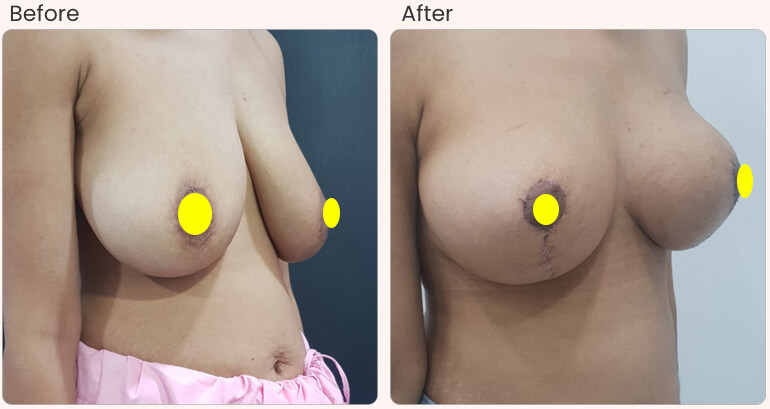
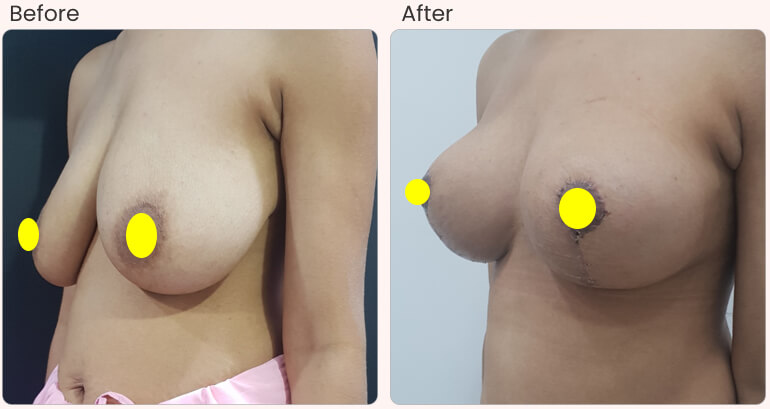
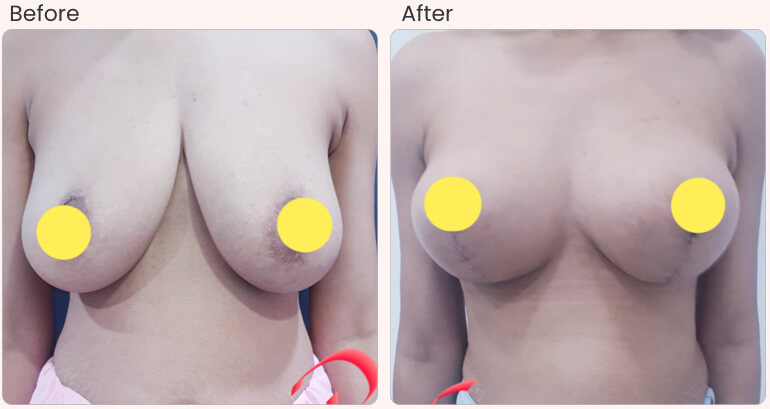
Breast Lift Best Results / Before & After


A 28-year-old patient came to us distressed—not just by #saggingbreasts, but also by noticeable #asymmetry. This wasn’t just a cosmetic concern; it was deeply affecting her psychological well-being. What this case demanded was precise planning, surgical finesse, and a personalized approach to restore symmetry and balance. With meticulous planning and technique, we were able to deliver just that.




A NOTE ON PHILOSOPHY
What a Breast Lift Can Truly Change
A breast lift can help you feel more confident in the body you have today.
You may begin considering it when your breasts no longer feel supported, when clothes do not sit the way they used to, or when the shape of the breast feels different after pregnancy, breastfeeding, weight changes, ageing, or changes in skin elasticity.
Often, the concern is not only about size. It is about position, shape, nipple placement, skin laxity, and the way the breast sits on the chest wall. You may feel that the breast looks lower, flatter, longer, or less proportionate to the rest of your body.
A breast lift, or mastopexy, is designed to reshape the existing breast tissue, remove excess skin where needed, and reposition the nipple to create a more lifted and balanced contour. It does not necessarily add volume. If you are happy with your natural breast size, a lift alone may be enough. If there is significant volume loss, a breast lift with implants may be discussed.
The right goal is not to recreate the breast you had in your twenties. It is to help the breast look more supported, proportionate, and natural for your current body, age, and frame.
Whether you are a good candidate depends on your breast volume, skin quality, nipple position, degree of sagging, weight stability, future pregnancy plans, medical history, and expectations.
A successful breast lift should help you feel more at ease in your clothes, more confident in your shape, and more aligned with the body you live in now.
WHO IS A CANDIDATE
Who Is a Candidate for a Breast Lift?
A breast lift may be appropriate for adult patients in good general health who have experienced breast sagging and wish to improve breast position, contour, and nipple placement. Patients should have realistic expectations regarding scarring, recovery, and long-term outcomes.
Many women begin their research by asking, “How do I know if I need a breast lift?” While every patient is different, common signs include nipples that sit below the breast crease, downward-pointing nipples, loss of breast firmness, and an elongated or deflated breast appearance.
The most common reasons patients seek mastopexy include:
Good Candidates
Not a Candidate
Questions such as “Can I breastfeed after a breast lift?”, “Will I lose nipple sensation after a breast lift?”, “Is a breast lift safe?”, and “What are the risks of a breast lift?” are discussed in detail during consultation because the answers depend on individual anatomy, surgical technique, and personal goals.
Not every consultation leads to surgery, and that is intentional.
For some patients considering a breast lift, Dr Rajat Gupta may recommend waiting, exploring another option, or planning surgery at a later stage when the body, health, weight, or expectations are better aligned.
This is not about delaying care. It is about choosing the right timing and the right procedure for the safest, most natural-looking result.
THE FOUR TECHNIQUES
Four Mastopexy Techniques, Matched to Ptosis Grade
There is no single “best” breast lift technique.
The right approach depends on your degree of sagging, nipple position, skin quality, breast volume, and the amount of correction needed. Based on this assessment, Dr Rajat Gupta may recommend a crescent lift, periareolar lift, vertical mastopexy, or anchor-pattern breast lift.
The aim is to create the required lift with the most suitable scar pattern and a breast shape that holds well over time.
Technique 1: Crescent Lift
The crescent lift involves removing a small crescent-shaped segment of skin above the areola. This allows the nipple-areola complex to be elevated by approximately 1 to 2 centimetres.
The scar is concealed along the upper border of the areola and is often the least visible of all breast lift scars.
Suitable for:
- Very mild ptosis (Grade 1)
- Minor nipple asymmetry
- Patients requiring minimal repositioning
Although often discussed online, only a small proportion of patients seeking breast lift treatment are candidates for a crescent lift because the correction achieved is limited.
Technique 2: Periareolar (Donut) Lift
The periareolar lift, sometimes called the donut lift, involves a circular incision around the areola. Excess skin is removed in a donut-shaped pattern and the areola is repositioned.
Patients frequently compare the crescent lift vs donut lift when researching options. The donut lift provides greater correction than the crescent technique while keeping the scar confined to the areolar border.
Suitable for:
- Mild ptosis
- Enlarged areolas
- Patients seeking modest lifting with minimal scarring
- Patients considering breast lift with implants
The technique is often combined with augmentation when additional upper-pole fullness is desired.
Technique 3: Vertical (Lollipop) Lift
The vertical mastopexy patients frequently enquire about is commonly known as the lollipop lift.
An incision is made around the areola and vertically downward to the breast crease. This allows significant reshaping of both skin and breast tissue while avoiding the horizontal scar used in anchor-pattern lifts.
Suitable for:
- Moderate breast ptosis (Grade 2)
- Breast lift after pregnancy
- Breast lift after weight loss
- Patients seeking a short scar breast lift approach
When patients compare anchor incision vs vertical incision breast lift, the vertical technique is often preferred when anatomy allows because it provides substantial correction with a reduced scar burden.
Technique 4: Inverted-T (Anchor) Lift
The anchor lift, also called an inverted-T mastopexy, is the most comprehensive breast lift technique.An incision is placed around the areola, vertically down the breast, and along the inframammary fold. This creates an anchor-shaped scar pattern and allows extensive reshaping of both skin and breast tissue.
Suitable for:
- Severe breast ptosis (Grade 3)
- Significant skin laxity after major weight loss
- Pseudoptosis
- Complex breast reshaping cases
Patients researching the difference between anchor lift and lollipop lift should understand that the anchor technique produces a longer scar but allows substantially greater correction when severe sagging is present.
The appropriate technique is determined during consultation after examination of breast position, skin quality, tissue volume, and patient goals.
When a Breast Lift Is Combined With an Implant
Patients often ask:
“Do I need a breast lift or breast augmentation?”
The answer depends on whether the primary concern is position, volume, or both.
A breast lift corrects sagging. An implant restores volume.
When both issues are present, breast lift with implants patients seek may provide the most balanced outcome. This procedure, known as augmentation-mastopexy, combines repositioning of the breast with restoration of fullness.
Patients comparing breast lift with implants vs without implants are guided through the advantages, limitations, recovery expectations, and long-term maintenance considerations during consultation.
A NOTE ON PUBLISHED RESEARCH
Published Research on Complex Mastopexy
When selecting the best breast lift surgeon, patients often look beyond before-and-after photographs and seek evidence of academic contribution and surgical expertise.
Dr Rajat Gupta has contributed peer-reviewed research to the international plastic surgery literature, including publications addressing some of the most technically demanding challenges in breast surgery.
A Retrospective Analysis of Our Experience With Autoaugmentation Mastopexy
Addressing the Challenging Problem of High-Riding NAC after Breast Reduction
What the Procedure Involves
Patients considering breast lift surgery often ask what happens on the day of surgery and how the operation is performed.
The information below provides a general overview. Your individual surgical plan will be documented in writing following consultation.
Breast lift surgery is performed under general anaesthesia administered by a qualified anaesthetist. A pre-anaesthetic assessment is completed before surgery to ensure suitability and safety.
Most mastopexy procedures require approximately 1 to 2 hours.
Combined procedures such as breast lift with implants may take longer depending on complexity.
The incision pattern depends entirely on the degree of breast ptosis and the chosen mastopexy technique.
Expected scars are discussed in detail before surgery and demonstrated using both anatomical diagrams and pre-operative markings.
The nipple and areola are repositioned to a more youthful and anatomically appropriate level.
Patients frequently ask:
“Will I lose nipple sensation after a breast lift?”
While sensation is preserved whenever anatomy allows, temporary changes in sensation may occur during recovery.
Excess skin is removed and the underlying breast tissue is reshaped to improve contour, projection, and support.
This is the key component of breast reshaping surgery in Delhi, allowing the breast to sit higher on the chest wall while maintaining a natural appearance.
Most patients return home on the same day.
In selected cases, an overnight stay may be recommended for additional observation and comfort.
All procedures are performed in accredited surgical facilities with full anaesthetic monitoring and established safety protocols.
Recovery: A Realistic Timeline
One of the most frequently searched questions is:
“How long is recovery after a breast lift?”
Recovery following mastopexy is gradual and occurs in stages. Individual healing varies, but the following timeline reflects a typical recovery pattern.
Swelling, bruising, and tightness are expected.
Patients wear a surgical support bra continuously and manage discomfort using prescribed medication.
Most patients return to desk-based work within 10 to 14 days.
This answers another common question:
“When can I return to work after a breast lift?”
For most office-based occupations, the answer is approximately two weeks.
Light exercise may be resumed.
Patients frequently ask:
“When can I exercise after a breast lift?”
Walking and lower-body exercise generally begin during this phase, while high-impact activity remains restricted.
Most normal physical activities can be resumed under guidance.
Sleeping restrictions are usually lifted during this period, addressing another common patient question:
“Can I sleep on my side after a breast lift?”
Breast shape becomes noticeably more refined as swelling decreases.
Scars continue to mature and fade.
Patients often ask:
“How long do breast lift results last?”
While no procedure can permanently stop ageing, a well-performed breast lift typically provides long-lasting improvement that can remain visible for many years.
Don't take biggest decision of life
Without getting complete information!
A Candid Discussion of Scars
One of the most common concerns patients have before undergoing breast lift surgery is:
“Will I have visible scars after a breast lift?”
The honest answer is yes. Every effective breast lift creates scars because skin must be removed to reposition and reshape the breast. The technique determines the scar pattern, not whether a scar exists.
There is no genuinely scarless breast lift. Any claim suggesting otherwise should be approached with caution.
The goal of modern mastopexy is not to eliminate scars but to place them strategically, support healing carefully, and help them mature as favourably as possible over time.
Patients considering a short scar breast lift should understand that scar length is determined by the degree of breast ptosis. Smaller scars are appropriate only when less correction is required.

Follow one of our past patients’s breast lift journey. Females only please
How Do We Manage The Scars?
Scar management begins before the first incision is made.
Approaches include:
- Careful incision planning along natural breast borders.
- Layered closure techniques designed to minimise wound tension.
- Absorbable sutures placed beneath the skin surface.
- Silicone-based scar therapy begins at 3 weeks and goes on up to 6 months.
- Sun protection throughout the first year of healing.
- Scar massage and physiotherapy where appropriate.
- Review of scar progression during scheduled follow-up visits.
Patients with a personal or family history of hypertrophic or keloid scarring should disclose this during their mastopexy consultation, as it may influence both surgical planning and post-operative care.
Most scars continue to improve for 9 to 12 months following surgery.
Risks
Risks & Complication
Patients researching “Is a breast lift safe?” or “What are the risks of a breast lift?” deserve clear and accurate information.
Breast lift surgery is considered safe when performed by a qualified, board-certified plastic surgeon in an accredited operating facility. However, no surgical procedure is entirely without risk.
General Surgical Risks
General surgical risks include:
- Bleeding
- Infection
- Delayed wound healing
- Fluid accumulation
- Adverse reaction to anaesthesia
Breast Lift-Specific Considerations
Potential mastopexy-specific considerations include:
- Temporary or permanent changes in nipple sensation
- Breast asymmetry
- Changes in areola shape or size
- Delayed healing at incision junctions
- Scar widening
Long-Term Considerations
Patients should also understand that surgery cannot stop ageing.
Gravity, pregnancy, breastfeeding, and weight fluctuation continue to affect breast tissue after surgery. Although breast lift results are long-lasting, they are not permanent.
Patients asking “Do breast lift results last forever?” should understand that mastopexy restores position once, but does not prevent future changes in breast shape.
Breastfeeding Considerations
Another common question is:
“Can I breastfeed after a breast lift?”
Breastfeeding may still be possible after mastopexy, particularly when the blood supply and tissue connections to the nipple-areola complex are preserved. However, breastfeeding capability cannot be guaranteed.
For this reason, patients planning future pregnancies are often advised to postpone surgery.
A detailed written consent document specific to your anatomy, health profile, and surgical plan forms part of the pre-operative process.
Transparent Pricing
What a Breast Lift Costs?
One of the most frequently searched questions is:
“How much does a breast lift cost?”
The breast lift surgery cost varies depending on the degree of breast ptosis, the technique selected, whether implants are required, and the overall complexity of the procedure.
What Determines Cost?
The final cost depends upon:
- Degree of breast ptosis
- Chosen mastopexy technique
- Implant requirements
- Surgical complexity
- Anaesthetic duration
- Hospital stay requirements
- Follow-up care requirements
WHY THIS PRACTICE
Why Patients Choose This Practice for a Breast Lift
Patients searching for the best breast lift surgeon or the best plastic surgeon for sagging breasts are often comparing experience, training, outcomes, and approach rather than price alone.
This practice is distinguished by:
- Board-certified plastic surgery credentials.
- International fellowship training in cosmetic and breast surgery at Hospital Sant Pau, Spain.
- Expertise across all four mastopexy techniques.
- Published research in complex breast surgery and revision mastopexy.
- Structured 12-month recovery and scar management programme.
- Written surgical planning before scheduling surgery.
- An ISAPS-accredited training environment.
- Long-term follow-up focused on safety and outcomes.
Most importantly, the consultation process prioritises patient suitability over procedural volume.
Not every patient who attends a consultation is advised to proceed with surgery.
Common Questions
Frequently Asked Questions About Breast Lift Surgery
A breast lift does not significantly reduce breast volume. However, some patients perceive a modest reduction because excess skin is removed and the breast is repositioned into a higher, more projected contour. Patients seeking greater volume generally benefit from a combined lift and implant procedure.
Neither procedure is inherently better. A breast lift corrects sagging and nipple position, while breast augmentation increases breast volume. The appropriate procedure depends entirely on the patient’s anatomy and goals. Some patients benefit most from a combined augmentation-mastopexy approach.
Yes. Many patients undergo mastopexy without implants because they are satisfied with their natural breast volume. Implants are only recommended when additional fullness or upper-pole projection is desired.
In most cases, breast lift surgery is considered a cosmetic procedure and is not covered by insurance in India. Exceptions are uncommon and depend on specific policy terms and medical circumstances.
Breast ptosis is the medical term for breast sagging. It occurs when the nipple and breast tissue descend below their original position due to ageing, pregnancy, breastfeeding, weight fluctuations, or genetics.
Most sensation changes are temporary and improve during recovery. Permanent changes are uncommon but remain a recognised possibility.
THE FIRST CONSULTATION
What to Expect at Your First Consultation?
A mastopexy consultation typically lasts between 30 and 45 minutes.
During the consultation, Dr Gupta evaluates:
- Breast position and ptosis grade.
- Skin quality and elasticity.
- Existing breast volume.
- Nipple position.
- Breast symmetry.
- Surgical goals and expectations.
Patients often arrive with questions such as:
- Do I need a breast lift or breast augmentation?
- Can I get a breast lift without implants?
- Which technique is right for me?
- What scars should I expect?
- How long will recovery take?
These questions are addressed in detail before any treatment recommendation is made.
The consultation concludes with a written surgical plan, discussion of risks, expected recovery, and a personalised cost estimate.
No decision is expected on the day.
Patients are encouraged to review the information carefully before proceeding.
Book a Considered Consultation
A breast lift is not simply about lifting tissue. It is about understanding anatomy, expectations, scarring, longevity, and the relationship between surgical change and long-term satisfaction.
Whether you are considering a breast lift, seeking advice regarding breast lift after pregnancy, evaluating breast lift after weight loss, or comparing breast lift with implants vs without implants, the consultation is designed to provide clear answers rather than to create pressure.