Rested eyes that still look like yours.
Scarless eyelid surgery, backed by published research.
Eyelid surgery, or blepharoplasty, refines the upper eyelids, lower eyelids, or both by addressing excess skin and fat that can make the eyes look tired, heavy, or older than you feel. It may be used for hooded upper lids, under-eye bags, or a combination of concerns. In selected cases, lower eyelid surgery can be performed through a transconjunctival approach, leaving no visible external scar. At this practice, blepharoplasty is planned with restraint and precision because even small changes around the eyes can make the face look more rested, alert, and naturally refreshed.
- Scarless transconjunctival lower-lid surgery
- Peer-published research in 88 patients
- ISAPS-accredited training centre

Procedure at a glance
Download A Patient Guidebook Of Blepharoplasty Surgery?
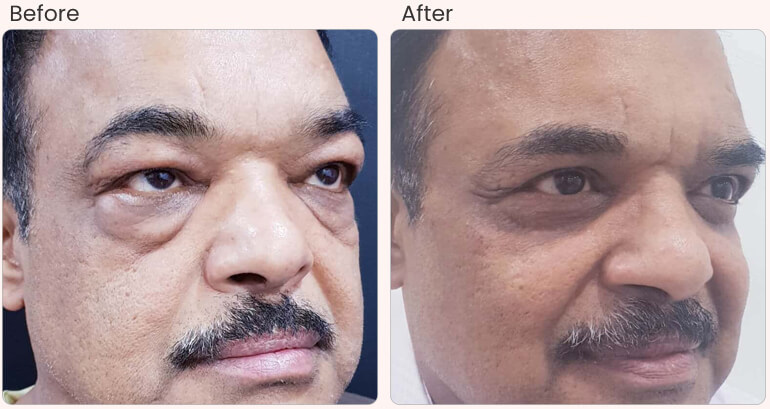
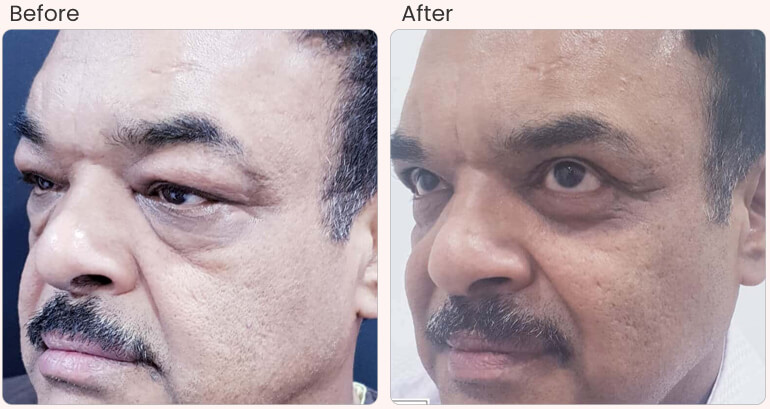
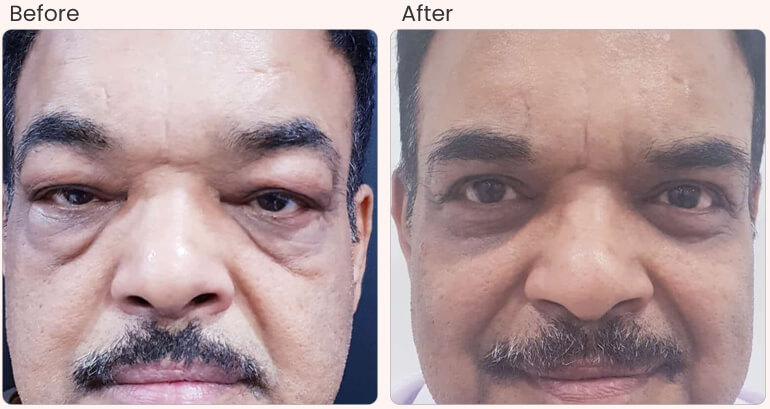
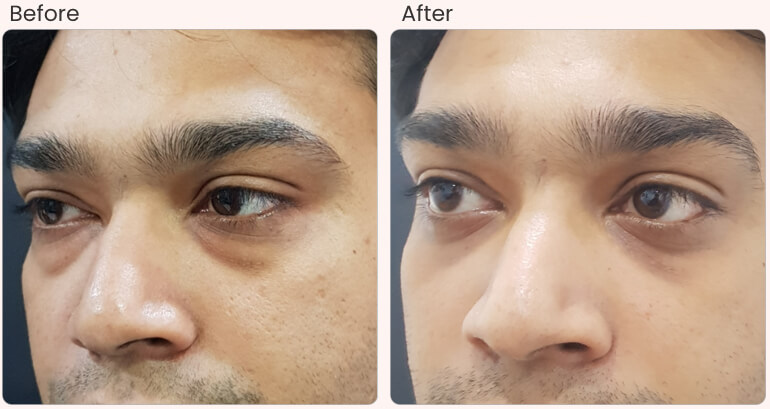
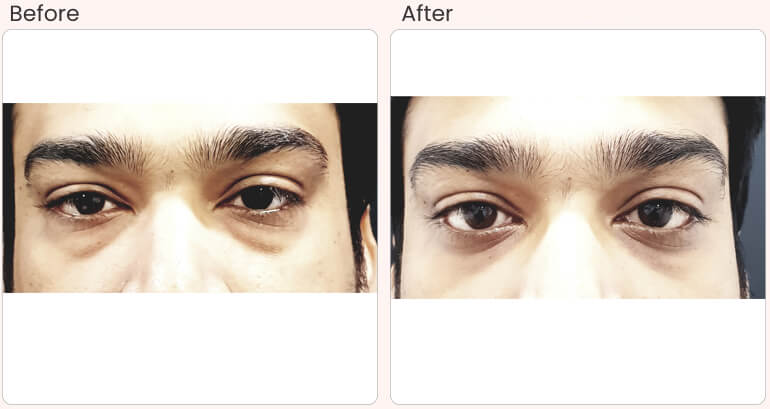
Blepharoplasty Surgery Best Results / Before & After


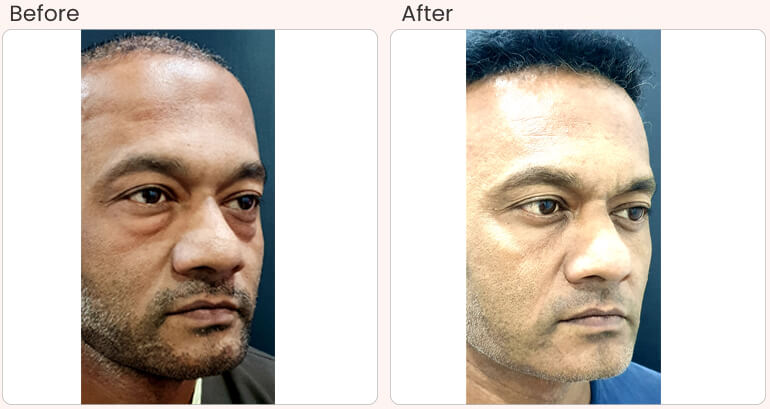
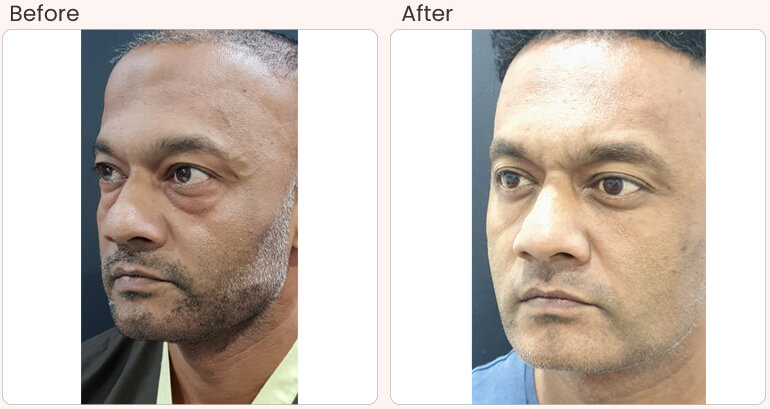
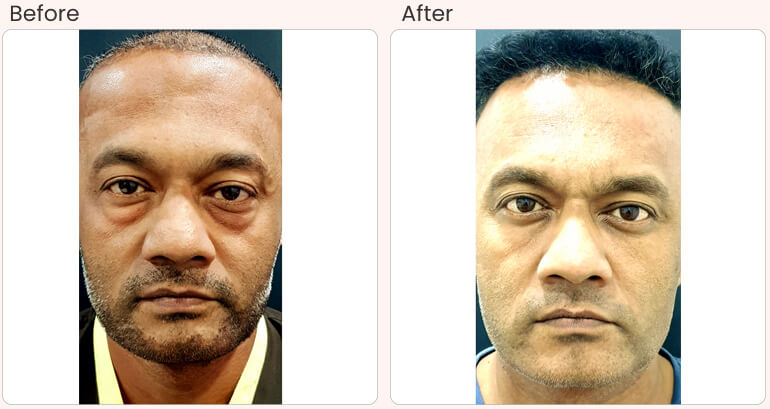
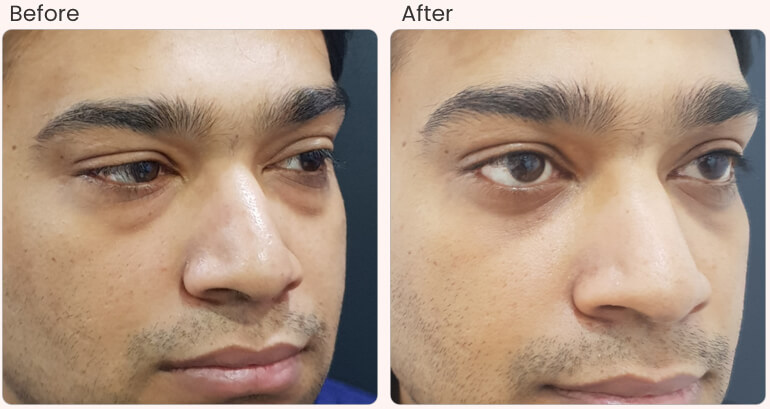
Our patient came to us that she looked tired because of her lower eyelid bags and wanted us to remove them. We did scarless transconjuctival blepharolasty for her along with fat grafting to her tear troughs so that she gets smooth eyelid cheek junction. This is her 12 days post surgery result and it shall only improve further as the swelling reduces




A NOTE ON PHILOSOPHY
A Note on What Eyelid Surgery Is, and What It Is Not
Eyelid surgery is not about changing the shape of your eyes. It is about taking away the tiredness around them.
Most patients considering blepharoplasty want the same thing: eyes that look rested, alert, and closer to how they feel. The aim is not to alter the natural shape or expression of the eyes, but to reduce excess skin, puffiness, and heaviness that have developed over time.
This is why precision matters. Too much correction can make the eyes look hollow or pulled. Too little may not create enough change. A well-planned blepharoplasty removes, repositions, and preserves only what is needed.
The goal is simple: eyes that no longer look tired.
WHO IS A CANDIDATE
Who is a Candidate for Eyelid Surgery?
Eyelid surgery is appropriate for adults in good general health, with the kind of eyelid changes that surgery can correct, and realistic expectations about the result.
The common reasons patients consult Dr Rajat Gupta for blepharoplasty include:
Good Candidates
Not a Candidate
Often the most useful conversation is whether your concern is best treated with surgery, with non-surgical alternatives, or with both.
THE TECHNIQUES
The Techniques, Matched to Your Eyelid Anatomy
There is no single eyelid surgery. The right technique depends on whether the concern is in the upper lid, the lower lid, or both, and whether the issue is excess skin, herniated fat, or a combination. The four most common approaches are described below, each suited to a specific clinical picture.
Upper Blepharoplasty
Upper eyelid surgery is performed for hooded lids and excess skin that obscures the natural eyelid crease.
A fine incision is placed within the natural crease itself, where it generally heals to an almost invisible line. Excess skin and, where required, a small amount of muscle or fat are removed before the eyelid is carefully closed.
Patients often report that their eyes feel lighter, their vision feels less restricted, and their overall appearance appears more alert and refreshed.
Lower Blepharoplasty (Transconjunctival)
This is the scarless lower eyelid surgery technique for which Dr Gupta has published research.
The incision is placed inside the lower eyelid, on the conjunctival surface, meaning there is no visible external scar whatsoever.
Through this hidden access point, the fat responsible for under-eye bags is removed or repositioned. Where hollowing contributes to a tired appearance, fat grafting may be performed simultaneously to smooth the eyelid-cheek transition.
The transconjunctival approach is particularly suitable for patients with under-eye bags but good skin elasticity.
Lower Blepharoplasty (Subciliary)
When under-eye bags are accompanied by excess skin, a different approach is required.
A fine incision is placed immediately beneath the lash line. Through this incision, fat is repositioned or removed and excess skin is carefully tightened.
The resulting scar is usually extremely discreet and becomes difficult to identify once healing is complete.
Combined Upper and Lower Blepharoplasty
Many patients have both upper-lid heaviness and lower-lid puffiness.
Performing upper and lower blepharoplasty together often creates the most balanced and harmonious rejuvenation of the eye area.
Asian Blepharoplasty
Asian blepharoplasty, often called double-eyelid surgery, creates or refines an upper eyelid crease where one is absent or subtle.
Because it involves distinct anatomical and aesthetic considerations, it is discussed separately on the dedicated Asian Blepharoplasty page.
At a Glance: Blepharoplasty Techniques
A summary for quick reference. The right technique for your case is determined at the consultation, based on examination of your skin, your underlying anatomy, and your goals.
| Technique | What It Addresses | Scar Profile |
|---|---|---|
| Upper Blepharoplasty | Heaviness, hooded lids, and excess skin obscuring the natural eyelid crease. | Fine incision hidden within the natural crease of the upper eyelid. Typically fades almost invisibly. |
| Lower Blepharoplasty (Transconjunctival) | Under-eye bags and fat puffiness, where skin quality is good and skin removal is not needed. | No external scar. The incision is placed inside the lower lid (transconjunctival), so nothing is visible from the outside. |
| Lower Blepharoplasty (Subciliary) | Under-eye bags combined with excess loose skin requiring tightening. | Fine incision placed just below the lash line. Typically fades to a very discreet line. |
| Combined Upper and Lower Blepharoplasty | Both upper-lid heaviness and lower-lid puffiness in the same procedure. | A combination of the relevant incisions above, planned together for a balanced eye refresh. |
| Asian Blepharoplasty | Creating or refining a defined upper eyelid crease, where the natural crease is absent or subtle. | Discreet incision along the planned crease line. Covered on the dedicated Asian Blepharoplasty page. |
PUBLISHED RESEARCH
Scarless Lower-Lid Surgery, Backed by Published Research
It is one thing for a clinic to advertise scarless lower-eyelid surgery. It is another to have published the outcomes of that technique in the peer-reviewed literature. Dr Gupta has.
The Transconjunctival Blepharoplasty Study
What the Procedure Involves?
The information below is a general overview. The specifics of your procedure will be documented in the written surgical plan after your consultation.
Most blepharoplasty procedures are performed under local anaesthesia with light sedation. This keeps the procedure comfortable while allowing a quicker recovery afterwards. General anaesthesia may be used when eyelid surgery is combined with other facial procedures. A full pre-anaesthesia assessment is completed before surgery.
Upper eyelid surgery typically takes 20 to 30 minutes.
Lower eyelid surgery usually takes 20 to 30 minutes.
Combined upper and lower blepharoplasty generally takes between 45 to 60 miutes.
The location of the incision depends on the technique selected.
Upper blepharoplasty uses an incision hidden within the natural upper eyelid crease.
Transconjunctival lower blepharoplasty uses an incision inside the lower eyelid, leaving no visible external scar.
Subciliary lower blepharoplasty uses a fine incision immediately beneath the lash line.
The planned incision pattern is explained and drawn for you during consultation.
Upper blepharoplasty, lower blepharoplasty, transconjunctival blepharoplasty, or a combined procedure is selected based on your anatomy and goals.
Depending on the anatomy, excess skin may be removed, fat may be removed or repositioned, and fat grafting may be used to restore a smooth transition between the eyelid and cheek.
Same-day discharge is appropriate for almost all patients undergoing blepharoplasty surgery.
All procedures are performed in an accredited operating facility with full monitoring and qualified anaesthetic support.
Recovery: A Realistic Timeline
Blepharoplasty has one of the quicker recoveries among facial cosmetic procedures because the eyelids have an excellent blood supply and typically heal efficiently. The timeline below is typical rather than universal.
Mild to moderate swelling, bruising, and tightness around the eyes are expected.
Sleeping with the head elevated and using cool compresses helps reduce swelling.
Most patients wear sunglasses outdoors during this period.
Where sutures are used, they are usually removed between day 5 and day 7.
Swelling around the eyes decreases significantly.
The majority of visible bruising fades in 2 weeks.
Reading, screen time, and normal daily activities are resumed.
Glasses and light eye makeup often help conceal residual bruising during this phase.
Residual swelling resolves.
Scars begin to soften and fade.
The final shape of the eyelids becomes increasingly apparent.
Scar maturation continues.
Upper-eyelid scars generally become extremely difficult to identify.
Transconjunctival lower eyelid surgery leaves no visible external scar at all.
You will receive a structured follow-up schedule, including reviews at week 1, week 4, and month 3. Remote follow-up is available where in-person review is not practical.
SCARS
A Candid Discussion of Scars
- Scarring is one of the first questions patients ask when considering eyelid surgery, and the honest answer depends on the technique being used.
- For upper blepharoplasty, the incision is placed within the natural eyelid crease. Once healed, it sits within the fold itself and is concealed during normal facial expression. The eyelid is one of the best-healing areas of the body, and most upper-eyelid scars become very difficult to identify.
- For lower blepharoplasty, the transconjunctival approach leaves no external scar because the incision is placed inside the eyelid.
- Where excess lower-eyelid skin requires tightening, a subciliary approach or skin pinch technique is used. This leaves a fine scar beneath the lashes that usually fades to a line that is extremely difficult to see.
How Scars Are Managed in This Practice
- Incisions positioned within natural anatomical lines.
- Transconjunctival techniques used whenever anatomy allows.
- Fine layered closure techniques.
- Careful handling of eyelid tissue to minimise tension.
- Sun protection during the first year of healing.
- Silicone-based scar therapy where appropriate.
- Individual scar-management protocols for patients with a history of hypertrophic or keloid scarring.
- The goal is not simply a healed scar. The goal is a scar that is difficult to find.
Don't take biggest decision of life
Without getting complete information!
RISKS
Risks: An Honest Disclosure
The risks below are listed because patients deserve to understand them before consenting to surgery, not because they are common.
In a properly selected patient, operated on by a qualified plastic surgeon in an accredited facility, the rate of significant complications is low.
General surgical risks
General risks include bleeding, infection, adverse reaction to anaesthesia, and delayed healing.
Eyelid-specific considerations
Temporary swelling and bruising are expected.
Some patients experience temporary dry-eye symptoms, foreign body sensation, light sensitivity, watering, or blurred vision during the early recovery period.
Minor asymmetry between the two eyelids can occur, as no face is naturally perfectly symmetrical.
Lower-lid considerations
The principal lower-lid concern is ectropion, where the lower eyelid sits slightly lower than intended.
This is uncommon when the correct technique is selected and when patient anatomy is assessed carefully beforehand.
Vision risk
Vision-threatening complications are exceptionally rare in elective blepharoplasty performed by a qualified plastic surgeon.
However, the eye is a delicate and important structure, and honest consent requires acknowledging that no surgical procedure is entirely without risk.
Long-term considerations
Blepharoplasty produces long-lasting improvement, but the eyelids continue to age naturally.
The surgery restores the eyelids to an earlier point in time. It does not stop the ageing process.
A full written list of risks specific to your procedure and medical history forms part of the consent process.
Transparent Pricing
What Eyelid Surgery Costs?
The cost of eyelid surgery varies according to whether the upper eyelids, lower eyelids, or both are treated, and which lower-lid technique is most appropriate.
What Determines Where in the Range Your Case Falls
- Whether upper eyelid surgery, lower eyelid surgery, or both are required.
- Whether transconjunctival or subciliary lower blepharoplasty is appropriate.
- Whether fat grafting is added.
- Anaesthetic requirements.
- Surgical complexity and operating time.
What Is Included
- Surgeon’s fee
- Anaesthetist’s fee
- Anaesthetist’s fee
- Follow-up reviews at week 1, week 4, and month 3
WHY THIS PRACTICE
Why Patients Choose This Practice for Eyelid Surgery?
- Peer-published research on transconjunctival lower blepharoplasty in 88 patients, supporting the genuinely scarless approach used here.
- All four eyelid techniques offered (upper, transconjunctival, subciliary, combined), with the choice driven by your specific anatomy rather than by what the practice happens to perform most often.
- A separate, dedicated approach for Asian blepharoplasty, with its own page reflecting the specific aesthetic considerations involved.
- A board-certified plastic surgeon and an ISAPS-accredited training centre.
- A philosophy oriented around natural results: eyes that look rested, not different.
- Honest assessment of whether your concern is best treated with surgery, with non-surgical alternatives, or with both.
- A written surgical plan documenting technique, expected scar pattern, risks, recovery, and cost before any procedure is scheduled.
Common Questions
Frequently Asked Questions About Eyelid Surgery
Eyelid surgery typically costs between INR 60,000 and INR 1,75,000 (approximately USD 628 to USD 1,830), depending on whether the upper eyelids, lower eyelids, or both are treated. Procedures involving fat grafting to the tear troughs may cost more. A written estimate specific to your case is provided after consultation.
Transconjunctival blepharoplasty is a lower-eyelid surgery technique in which the incision is placed inside the eyelid, leaving no visible external scar. It is used to remove or reposition the fat responsible for under-eye bags. Dr Gupta has published outcomes for this technique in a peer-reviewed series of 88 patients.
Upper blepharoplasty leaves a fine scar hidden within the natural eyelid crease, where it typically becomes very difficult to see. Lower-lid transconjunctival blepharoplasty leaves no external scar because the incision is inside the eyelid. Subciliary lower-lid surgery leaves a fine scar beneath the lash line that generally fades well.
No. Properly performed blepharoplasty restores the eyelid to a more youthful version of its previous appearance rather than changing the shape of the eye itself. The goal is to remove heaviness and puffiness while preserving your natural expression.
Yes. The fat responsible for under-eye bags can be removed or repositioned during lower blepharoplasty, and that fat does not regenerate. The surrounding tissues continue to age naturally, but the improvement is typically long-lasting.
Most patients return to work within 7 to 10 days after eyelid surgery. The final result becomes increasingly apparent over 2 to 3 months.
Eyelid surgery is generally associated with minimal pain. Most patients describe tightness, pressure, foreign body sensation or mild discomfort rather than significant pain. Recovery is usually well managed with prescribed medication and simple aftercare measures.
There is no single best age for blepharoplasty. Upper eyelid surgery is most commonly performed in patients over 40, while lower eyelid surgery for inherited under-eye bags may be appropriate in younger adults. The right timing depends on anatomy rather than age alone.
Eyelid surgery is usually considered cosmetic and is generally not covered by insurance. The exception is functional upper-lid surgery where documented visual-field obstruction exists. Eligibility depends on the insurer’s criteria and supporting clinical evidence.
Yes. Blepharoplasty is frequently combined with brow lift, facelift, fat grafting, laser resurfacing, botulinum toxin treatment, or dermal fillers. Combining procedures often allows comprehensive facial rejuvenation with a single recovery period.
THE FIRST CONSULTATION
What to Expect at Your First Consultation?
An eyelid surgery consultation with Dr Gupta takes 45 to 60 minutes. It includes:
- A discussion of what bothers you about your eyes, how long it has been a concern, and what you are hoping for.
- A clinical examination of your eyelid skin, fat distribution, tear-trough region, eye health, and overall eye anatomy.
- A discussion of which technique suits your case, including whether transconjunctival or subciliary is the right lower-lid approach for you, and whether fat grafting would refine the result.
- Where appropriate, discussion of whether non-surgical treatments would serve you better, alone or before considering surgery.
- A clear explanation of where any incisions will sit.
- An honest assessment of what is achievable, and what is not.
- A review of risks, recovery, and the structured follow-up programme.
- A written estimate of cost.
You will receive a detailed assessment, an honest recommendation, and a clear explanation of the options available.
Book a Considered Consultation
A consultation with Dr Gupta is the beginning of a conversation, not a transaction.