Rhinoplasty Surgery 101: What You Need to Know About Nose Reshaping
Your nose is the centre of your face, so even the smallest change can make a huge difference in how you look and how you feel. A nose that feels slightly too big, too wide, or crooked can draw attention away from your eyes and other features; on the other hand, a balanced nose creates overall facial harmony. That is why rhinoplasty surgery is not just a cosmetic decision; it is often a life-changing one that improves confidence and, in many cases, breathing too. The idea is not to erase identity, but to create a version of the nose that feels more aligned with how you see yourself.
Many people have been bothered by their nose shape for years, and after seeing transformation stories or speaking to a specialist, they finally realise that help exists. This guide is designed to give you complete clarity as you begin your journey with rhinoplasty surgery in Delhi, starting from the basics to decision-making and recovery.
Rhinoplasty: What It Really Means
Rhinoplasty surgery is a procedure where the structure of the nose is reshaped to improve appearance, breathing, or both. The surgeon can refine the cartilage, bone, and soft tissue depending on what you want to change. The technical name for this operation is nose reshaping surgery, and it has both cosmetic and functional value.
Some people want a straighter bridge, others want the tip lifted slightly for a more feminine profile, and some want better airflow because their nose has always been blocked. One of the biggest benefits of modern nose reshaping surgery is that a single procedure can handle both concerns at once, so the appearance improves while the breathing becomes easier.
Common Reasons People Choose Nose Reshaping
People usually have one or more of the following concerns:
- Nose looks too large or flat from the front
- Hump on the bridge is visible in side profile photos
- Tip looks too round, droopy, or thick
- Frequent mouth breathing because the nose feels blocked
- Nose became crooked after an injury
- Dissatisfaction from childhood teasing or low self-esteem
Correcting these issues with rhinoplasty surgery offers not just a new shape but a new sense of ease in daily life, including how you look in photos and how your face feels in balance.
Have questions or want to get started? We are ready to help you with a smile!
Types of Rhinoplasty Surgery: Understanding Your Options
There is no single approach that works for every nose. Each patient has unique anatomy, breathing concerns, and cosmetic goals. That is why Rhinoplasty Surgery includes multiple techniques, each suited to a specific structural requirement. A well-trained Cosmetic surgeon in Delhi selects the most appropriate method after a detailed facial assessment, digital planning, and medical evaluation. Choosing the right type of procedure directly influences both the visual outcome and long-term function.
Open Rhinoplasty
This technique involves a tiny incision on the columella, the strip of skin between the nostrils. By gently lifting the nasal skin, the surgeon sees the cartilage and bone clearly from all angles. This precise visibility makes open rhinoplasty the preferred choice when dramatic or complex reshaping is needed, such as major tip refinement, post-trauma correction, or rebuilding structural support.
Although a small scar remains beneath the nose, it typically heals into a nearly invisible line. The benefit of complete access ensures balance, symmetry, and structural strength.
Closed Rhinoplasty
All incisions are placed internally, so there are no visible scars. Since the skin is not lifted completely, the surgeon works through smaller access points. This technique can reduce early swelling and offer faster initial recovery.
Closed rhinoplasty is well-suited for mild to moderate adjustments, such as hump removal or minor tip refinement, but may not always be suitable for complex cartilage work. A Cosmetic surgeon in Delhi will judge whether a closed approach can achieve your desired improvements.
Functional Rhinoplasty
Some rhinoplasty procedures focus primarily on improving breathing rather than appearance. Functional rhinoplasty addresses structural airflow blockages like:
- Deviated septum
- Collapsed internal nasal valve
- Enlarged turbinate bones
- Narrow airway passage after injury
Many patients choose a combined functional and cosmetic approach so breathing and shape improve together.
Septorhinoplasty
This is a combined corrective procedure to straighten the septum and reshape the external nose in one surgery. It is often recommended when patients experience both visible deviation and breathing difficulty. The benefit of a single procedure is a unified improvement in appearance and airflow.
Preservation Rhinoplasty
This advanced method focuses on preserving natural nasal structures rather than aggressive removal. Instead of cutting down the bridge hump directly, the surgeon lowers the surrounding bone and cartilage, maintaining smoother lines and a more natural nasal contour.
Preservation rhinoplasty is often chosen for patients who want subtle refinement without losing the natural characteristics of their nose.
Revision Rhinoplasty
When a previous nose surgery has not delivered the intended result or has caused breathing issues, a second surgery may be required. Revision procedures are often more complex because cartilage has already been altered or removed. Surgeons may need to use grafts from the septum, ear, or rib to rebuild support.
Revision rhinoplasty should only be performed by a surgeon with expertise in complex reconstructive techniques.
Ethnic Rhinoplasty
Every ethnicity has unique nasal features such as thicker skin, broader tips, or lower bridge height. Ethnic rhinoplasty respects these defining traits while refining proportions. The goal is enhancement without erasing cultural identity. Personalisation is essential so that the final look remains natural to the individual’s heritage.
Tip Rhinoplasty
Sometimes the concern lies only in the lower third of the nose. Tip rhinoplasty focuses on refining the cartilage in this area to improve projection, rotation, and definition. This can be performed open or closed, depending on the level of detail required.
How to Know Which Technique is Right for You
Each person’s nasal structure has different strengths and limitations. The right choice depends on:
- Skin thickness
- Cartilage strength
- Bridge shape
- Tip position and definition
- Breathing efficiency
- History of trauma or prior surgery
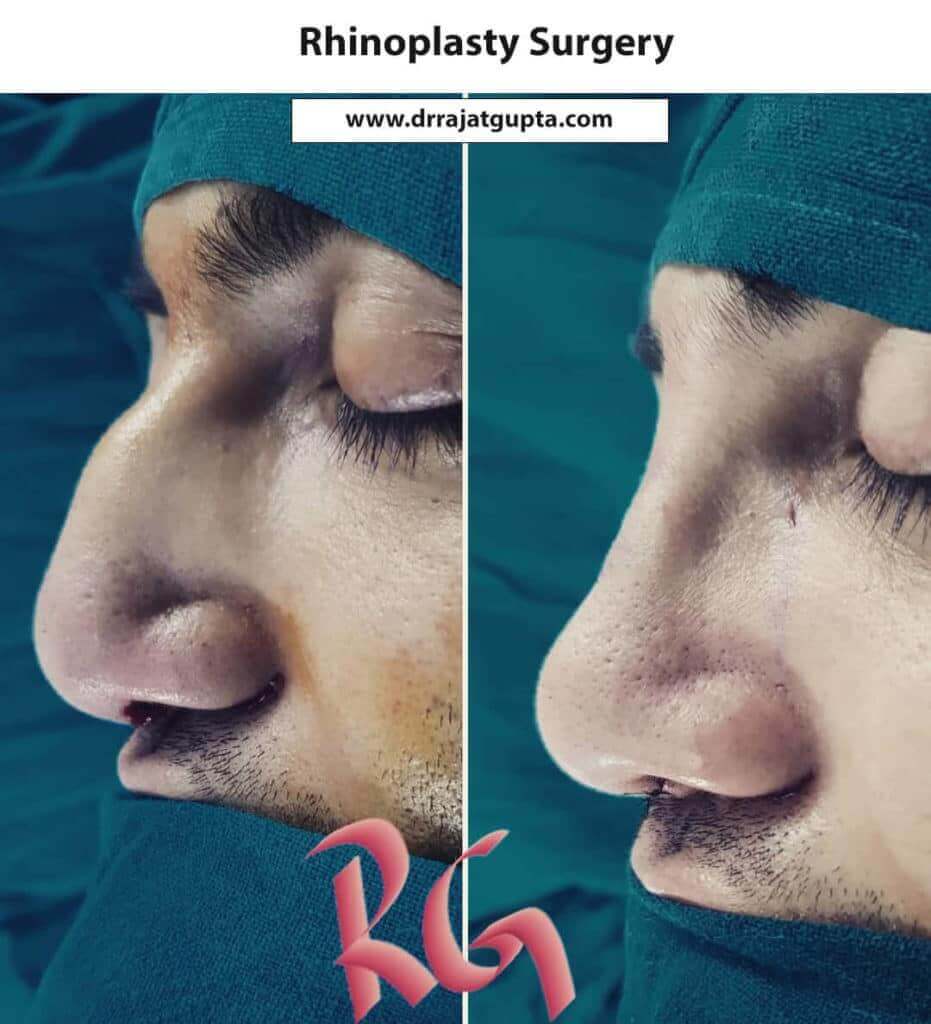
A cosmetic surgeon in Delhi will examine all of these factors before recommending a customised surgical plan. The goal is not to force your nose into a standard shape, but to enhance its proportions while preserving its function.
Whether the goal is subtle refinement or complete reshaping, success depends on choosing a method that provides maximum control with minimal disturbance to supportive tissues. A skilled surgeon evaluates the long-term picture: how the nose will age, move, and harmonise with the rest of the face.
How Rhinoplasty Surgery Is Performed: Step by Step
A well-planned rhinoplasty follows a precise sequence to ensure both aesthetic refinement and improved function. Here is a simplified look at what typically happens on the day of surgery:
- Arrival and Preparation
You arrive at the surgical facility, change into comfortable clothing, and meet the care team, who will guide you through each step. Pre-surgery evaluations are performed to confirm that everything is ready for a safe procedure. - Anaesthesia for Comfort
Anaesthesia is administered so the experience remains painless. Once fully comfortable, the surgical process begins. - Exposure and Framework Correction
The surgeon gains access to the nasal structures either through internal (closed) or minimal external (open) incisions. The framework is meticulously reshaped by adjusting cartilage, correcting bone height or width, and improving internal airflow channels where necessary. - Use of Piezotome for Precision Bone Contouring
Instead of traditional chisels that may cause unwanted trauma, Dr Rajat Gupta uses an advanced ultrasonic surgical tool called the Piezotome. This device works only on bone while preserving surrounding soft tissues, nerves, and blood vessels. The benefit is improved control, smoother nasal lines, reduced bruising, and a more comfortable recovery. - Refining the Tip and Alignment
Fine adjustments are made to refine the nasal tip for better definition and harmony with the bridge and upper face. - Supportive Suturing
Internal sutures are placed to maintain both breathing support and long-term structural stability. - Splint Placement and Healing Support
A small external splint is placed to protect the new shape and support proper alignment during early recovery.
Every part of the procedure is planned to secure a result that looks naturally balanced while ensuring nasal function improves. Many patients who once struggled to breathe through their nose notice a smoother airflow once swelling decreases in the weeks following surgery.
Recovery Timeline: How Long Until You Look “Normal”?
Recovery is progressive and often easier than expected:
| Time Period | What You Can Expect |
| Days 1–3 | Mild swelling near the eye area, slight pressure sensation |
| 1 week | Splint removed; most swelling improves enough to go out socially |
| 2–3 weeks | Subtle, sharper look appears; breathing gets better |
| 1–3 months | Structure refines more clearly; photos look closer to final |
| 6–12 months | Final definition in the tip and bridge is visible |
Most people return to school or office work within a week or 10 days.
Breathing Benefits: A Silent Game Changer
Even if you primarily desire appearance improvement, many patients notice that nose reshaping surgery also makes airflow smoother. When internal alignment is corrected, you breathe peacefully through the nose instead of your mouth. This helps:
- Sleep better
- Exercise more comfortably
- Reduce sinus issues
- Maintain oral health
So, Rhinoplasty Surgery can become a functional gift disguised as a beauty procedure.
Will Rhinoplasty Surgery Hurt?
There is mild discomfort, mostly from swelling rather than pain. Pain relief medication for the initial few days is usually enough. Most patients describe the feeling as nasal congestion more than pain.
A highly trained Cosmetic surgeon in Delhi will also use gentle tissue-handling techniques that support faster, more comfortable recovery.
Will It Look Natural? Absolutely?
Naturalness is the top priority. A well-planned Rhinoplasty Surgery is designed so that nothing looks artificial or exaggerated. Your ethnic identity, personality, and facial proportions guide the final shape.
The best results make someone say, “You look great”, without immediately noticing what changed.
Who is a Good Candidate for Nose Reshaping Surgery?
You may be a strong candidate if:
- You are unhappy with how your nose looks from any angle
- You face breathing discomfort due to structural issues
- Your facial growth is complete
- You have realistic expectations
- You want better balance among your features
Your surgeon should help you understand exactly what is possible and what is right for your face.
Possible Risks: Why Experience Matters
Any surgery has risks, such as temporary breathing difficulty during healing or swelling that takes longer to settle. However, when you choose a highly skilled Cosmetic surgeon in Delhi, you reduce uncertainty significantly. Experience brings precision, but even more importantly, judgment: knowing when to do less, so the result feels naturally yours.
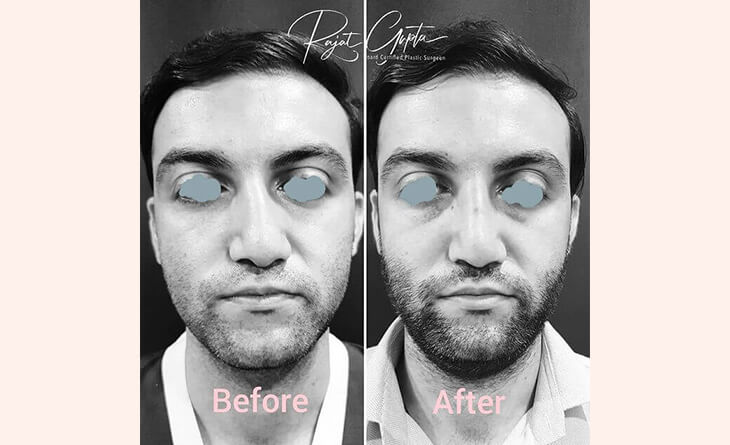
Rhinoplasty Surgery Before and After Visual Planning
Modern planning uses advanced digital simulation so you can see a probable outcome before the procedure. While it does not guarantee the exact look, it sets shared expectations and helps you visualise realistic enhancements.
How Long Do Results Last?
The changes from Rhinoplasty Surgery are permanent. The nose will still age gently with the face, but your new proportions remain stable for life. Most people feel that this procedure not only corrects a feature but also rewrites their confidence.
Book Your Consultation with Dr. Rajat Gupta
If you are planning nose reshaping surgery, take the next step with Dr Rajat Gupta, a leading Cosmetic surgeon in Delhi known for natural artistry in rhinoplasty surgery, advanced planning, and safe results that remain beautiful for years. His approach focuses on both breathing and beauty, so you enjoy full facial harmony and comfort.

Dr. Rajat Gupta
MBBS, MS, DNB(Gen. Surg.),
DNB (Plastic Surgery)
Dr. Rajat Gupta is a board certified plastic surgeon in India with 18+ years of experience to back his expertise in the domain of aesthetic surgeries.
Having completed his training from Maulana Azad Medical College and equipped with a thorough understanding of aesthetic needs of people, Dr. Gupta strives to offer the best remedies and cosmetic procedures outfitted with the latest technology to the aspirants in India and across the globe. To book an appointment, call: +91-9251711711 or email: [email protected]
Share this post

Related Posts

How Long Does Rhinoplasty Surgery Take?
Rhinoplasty, commonly known as nose reshaping surgery, is a popular cosmetic surgery... read more

How to Get Rhinoplasty Covered by Insurance?
While many people get rhinoplasty surgery for cosmetic reasons, some need surgery... read more

How Long Does a Nose Job Take to Heal?
A common question patients ask while considering rhinoplasty surgery in Delhi is... read more
Celebrity Rhinoplasty Surgery in Delhi: Enhance Your Beauty
Have you ever wondered why celebrities always seem to have perfectly balanced... read more

Rhinoplasty in India: What’s the Best Age for a Nose Job?
If you’re wondering about the ideal age for a nose job procedure,... read more
Can Rhinoplasty Correct a Nasal Hump and Crooked Bridge?
Yes, a rhinoplasty procedure can correct both - a nasal hump and... read more

A New You: The Life-Changing Benefits of Rhinoplasty
Have you ever felt self-conscious about the shape or size of your... read more

Different Types of Nose Jobs: Which One Is Right For Me?
Have you ever wondered why some nose jobs look so natural while... read more
Your Gateway To A Beautiful Nose
In a world obsessed with external beauty, one is often left envying... read more

How Long to Recover from Rhinoplasty?
Rhinoplasty, or nose surgery, is a well-known cosmetic procedure many people choose... read more