
A balanced profile. A defined jawline. A chin that quietly completes your face.
Performed intraorally, with no visible scar.
Chin augmentation, chin implant surgery or genioplasty, improve the projection and shape of the chin to create better facial balance. It can be performed using a medical-grade silicone implant or by moving the chin bone forward with sliding genioplasty. Both procedures are performed through an incision inside the mouth, leaving no visible scar on the face.
The chin has a surprisingly important role in facial balance. Even a small increase in projection can strengthen the profile, improve jawline definition, and bring the nose, lips, and chin into better proportion. In some patients, refining the chin has a greater impact than changing the nose itself.
This page explains the different chin augmentation techniques, who is a suitable candidate, what recovery involves, the possible risks, and the chin augmentation surgery cost. It also explains when combining chin augmentation with rhinoplasty can create a more balanced profile.
- Intraoral approach with no facial scar
- Silicone implant and sliding genioplasty offered
- ISAPS-accredited training centre

Procedure at a glance
Download A Patient Guidebook Of Chin Augmentation?
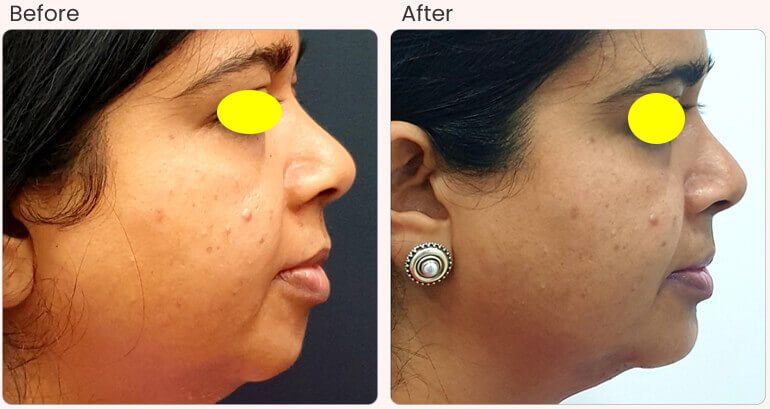
Chin Augmentation Best Results / Before & After


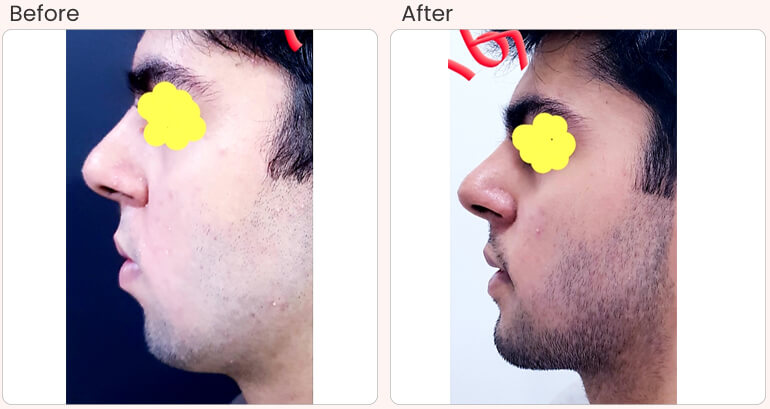
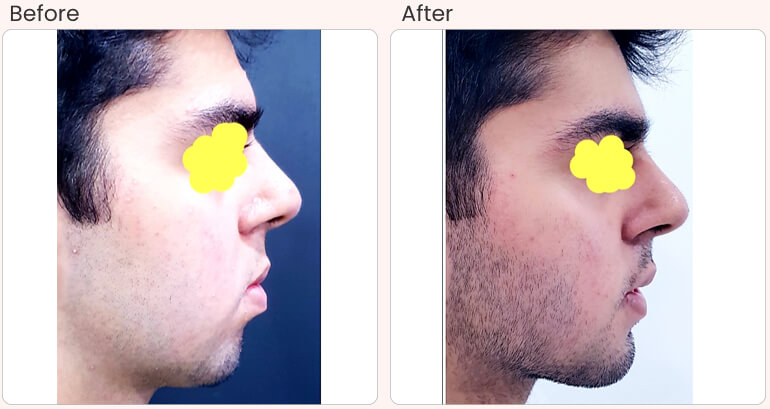
This young boy had a retruded chin that affected his overall facial aesthetics. To address this, we performed a chin implant surgery, offering him a permanent and natural-looking solution. Chin augmentation not only enhances chin projection but also defines the jawline, resulting in a more balanced and confident appearance.
The procedure was completed in just 30 minutes using an intraoral approach, ensuring no visible scars on the face or neck.




A NOTE ON PHILOSOPHY
A Note on What Chin Augmentation Is, and What It Is Not
Many patients who come in asking about rhinoplasty discover that their nose is already well proportioned. The feature affecting the profile is often a chin that sits slightly behind the rest of the face. In these cases, a small change to the chin can bring the entire profile into better balance.
That said, chin augmentation is not the right answer for everyone. A chin can appear weak because of loose neck skin, fullness beneath the chin, or the shape of the lower face. A careful examination is the only way to identify the real cause, and an honest recommendation should always reflect that.
When chin augmentation is the right choice, the results can be remarkably satisfying. Even a subtle change can have a noticeable effect on facial balance, with a relatively quick recovery and results that last for many years.
WHO IS A CANDIDATE
Who Is a Candidate for Chin Augmentation?
Chin augmentation is appropriate for adults in good general health with a chin that is genuinely receded or under-projected relative to the rest of the face, and realistic expectations about what the procedure can change.
The common reasons patients consult Dr Gupta for chin augmentation include:
Good Candidates
Not a Candidate
Half the value of the consultation is understanding which feature is really causing the imbalance. It is not always the one the patient came in to discuss.
THE APPROACHES
The Surgical Approaches
There is no single right way to augment a chin. The right approach depends on how much projection is needed, the underlying bone structure, and whether the chin requires repositioning as well as enhancement. The two main surgical options are described below, alongside the role of fat grafting and non-surgical fillers.
Approach 1
Silicone Chin Implant
The most common chin augmentation procedure performed worldwide and at this practice. A medical-grade silicone implant, custom-sized to the patient’s anatomy, is placed securely over the existing chin bone through a small incision inside the mouth (intraoral chin implant approach). The implant is positioned, secured, and the incision is closed with absorbable sutures.
Because the incision is inside the mouth, there is no visible scar on the face. The procedure typically takes about 20 to 30 minutes. The implant integrates well with the surrounding tissues and provides a stable, lasting result. It can also be removed or exchanged in future if the patient ever wishes, which is an important reassurance for patients hesitant about a permanent change.
Approach 2
Sliding Genioplasty
Used where the chin requires more than simple forward projection, or where the patient prefers not to have an implant. In this approach, the tip of the chin bone is detached and repositioned forward (or repositioned in other directions for complex cases), then fixed in its new position with small titanium plates and screws. The incision is also intraoral, so again there is no visible facial scar.
Whether implant or genioplasty is the right answer for you is determined at consultation, based on examination of your anatomy and your goals.
Approach 3
Non-Surgical Fillers (For Reference)
Hyaluronic acid fillers can be used to temporarily enhance chin projection without surgery. The effect is immediate, requires no recovery, and is reversible. It typically lasts 12 to 18 months before touch-ups are needed.
Fillers are useful in two situations: as a temporary option for patients not ready to commit to surgery, and as a trial to see how an enhanced chin suits your face before deciding on a permanent implant. Many patients find this trial valuable. For patients who want a durable, long-term result, however, a chin implant surgery or sliding genioplasty is the more economical and lasting choice over time.
At a Glance: Chin Augmentation Approaches
A summary for quick reference. The right approach for your case is determined at the consultation.
| Approach | How It Works | Often Suited To |
|---|---|---|
| Silicone Chin Implant | A medical-grade silicone implant is placed securely over the existing chin bone, usually through a small incision inside the mouth. | Most patients with a mildly to moderately receding chin who want a long-lasting, low-risk solution with no visible scar. |
| Sliding Genioplasty | The tip of the chin bone is repositioned forward (or, less commonly, reshaped or shortened) through an intraoral incision, without using an implant. | Patients requiring larger correction, complex repositioning, or those who prefer to avoid an implant. |
| Non-Surgical Fillers (For Reference) | Hyaluronic acid filler is injected to temporarily enhance chin projection. Not a surgical procedure. | Patients wanting to test the look of an enhanced chin before committing to surgery, or those wanting a temporary effect. |
Don't take biggest decision of life
Without getting complete information!
THE CHIN AND THE NOSE
Why the Chin and the Nose Are Often Best Considered Together?
The two features that most define the profile are the nose and the chin. When one is altered without considering the other, the result can look unbalanced.
A common scenario: a patient consults about their nose, which they feel is too prominent. On examination, the nose is in fact within a normal proportion, but the chin sits slightly behind the rest of the lower face. Refining the chin in this situation does more for the overall profile than altering the nose, because it changes the framing of the entire face rather than addressing a single feature.
Equally, where a rhinoplasty is genuinely indicated, performing chin implant with rhinoplasty or sliding genioplasty at the same time often produces a more harmonious result than rhinoplasty alone. Dr Gupta has peer-published research on rhinoplasty technique, including composite grafts for complex cases, and the combined chin-and-nose consultation is part of the standard approach for patients where profile balance is the goal. The two procedures can be performed in the same operation, with a single recovery, when both are clinically appropriate.
What the Procedure Involves
The information below is a general overview. The specifics of your chin augmentation procedure will be documented in the written surgical plan after your consultation.
Usually general anaesthesia, occasionally local with sedation for straightforward implant cases. Pre-anaesthesia assessment is performed beforehand.
A chin implant typically takes 20 to 30 minutes. Sliding genioplasty takes 60 to 90 minutes. A combined chin and rhinoplasty procedure adds the rhinoplasty time on top.
Intraoral, placed inside the lower lip where it meets the gum. No incision is made on the face itself, so no visible scar results from the procedure.
Implant or bone repositioning: The chosen approach is performed precisely as planned at consultation. The implant or repositioned bone is secured, and the soft tissue is closed in layers with absorbable sutures.
Most patients are discharged the same day for a straightforward chin implant, and for sliding genioplasty most are discharged the same day or after a short overnight stay.
All procedures are performed in an accredited operating facility with full anaesthetic monitoring.
Recovery: A Realistic Timeline
Recovery after chin augmentation has one of the easier recovery periods among facial procedures, particularly when a silicone implant is used. The timeline below is typical rather than universal.
Swelling and tightness around the chin and lower face. Soft diet for a couple of days, with frequent mouth rinses to keep the intraoral incision clean. Some numbness of the chin and lower lip is common and improves gradually. Discomfort is managed with prescribed medication.
Most visible swelling settles. Most patients return to desk-based work within 2 to 3 days. Light social activity resumes. Eating returns to softer normal foods.
Most remaining swelling resolves. Sensation continues to return. The new chin contour becomes clearer and the early results of the chin augmentation procedure become increasingly visible.
Contact sports and activities involving impact to the face are avoided for longer to protect the implant or healing bone.
The final result emerges as the last subtle swelling resolves. Sensation continues to refine.
You will receive a structured follow-up schedule, with reviews at week 1, week 4, and month 3. Remote follow-up is available where in-person review is not practical.
The final aesthetic result becomes increasingly stable.
Scars continue to mature and improve for up to 12 months following surgery.
Structured Follow-Up
Patients receive scheduled reviews at:
- Week 1
- Week 4
- Month 3
- Month 12
Remote follow-up is available where in-person attendance is impractical.
RISKS
Risks: An Honest Disclosure
Like any surgery, chin augmentation carries some risks. Significant complications are uncommon when the procedure is performed on a suitable candidate by a qualified, board-certified chin augmentation surgeon.
General surgical risks: Bleeding, infection, reactions to anaesthesia, and delayed healing.
Implant-specific considerations: Implant movement, which may occasionally require adjustment, implant exposure (rare), or the need to replace or remove the implant in the future.
Changes in sensation: Temporary numbness of the chin and lower lip is common because of swelling around the mental nerve. Sensation usually returns over the following weeks or months.
Sliding genioplasty considerations: A small risk of the bone or fixation plates requiring further treatment, along with a longer recovery and temporary changes in sensation compared with a chin implant.
Long-term considerations: A chin implant can be removed in the future if your preferences change.
You will also receive a written explanation of the risks based on your procedure and medical history before surgery.
Transparent Pricing
What Chin Augmentation Costs?
The cost of chin augmentation depends on the procedure, the complexity of the case, and whether it is combined with another surgery, such as rhinoplasty. The figures below are a guide. After your consultation, you will receive a written estimate based on your treatment plan.
What Determines the Cost of Chin Augmentation Procedure?
- The procedure selected (implant versus sliding genioplasty).
- The type and brand of implant used.
- Whether the procedure is combined with chin implant with rhinoplasty or other facial procedures.
- Surgical and anaesthetic time required.
What Is Included?
- Surgeon’s fee
- Anaesthetist’s fee
- Operating theatre charges
- Implant (where used)
- Follow-up reviews at week 1, week 4, and month 3
WHY THIS PRACTICE
Why Patients Choose This Practice for Chin Augmentation?
- Both chin implant and sliding genioplasty are available. The right procedure is chosen after assessing your anatomy and the result you want to achieve.
- Surgery is performed by a board-certified chin augmentation surgeon with international fellowship training in cosmetic surgery and at an ISAPS-accredited training centre.
- Patients considering a chin implant with rhinoplasty benefit from the practice’s published research in rhinoplasty and facial profile balance.
- Every consultation includes an honest discussion about whether chin augmentation is the best option. If another procedure is likely to produce a better result, that recommendation will be made.
- If you’re unsure about surgery, reversible chin filler can help you preview the change before making a permanent decision.
- Before surgery, you’ll receive a written plan covering the procedure, expected outcome, recovery, risks, and chin augmentation surgery cost.Both procedures are performed through an incision inside the mouth, leaving no visible scar on the face.
Common Questions
Frequently Asked Questions About Chin Augmentation
Chin augmentation surgery cost typically ranges from INR 1,10,000 to INR 3,75,000 (approximately USD 1150 to USD 3,920), depending on whether a silicone implant or sliding genioplasty is used. A combined chin and rhinoplasty procedure costs more. Chin filler, as a non-surgical alternative, costs INR 30,000 per ml. A written estimate specific to your case is provided after consultation.
No. Both chin implant surgery and sliding genioplasty are performed at this practice through an intraoral incision inside the mouth, so there is no scar on the face. The incision heals quickly and remains completely hidden from view.
A chin implant uses a medical-grade silicone implant to improve chin projection. Sliding genioplasty moves the patient’s own chin bone forward and secures it with small plates and screws. Chin implants suit most patients and usually involve a quicker recovery, while sliding genioplasty is reserved for more complex corrections or those who prefer to avoid an implant.
A chin implant is designed to last indefinitely and most patients keep theirs lifelong. Implants do not degrade or dissolve and remain stable in position. They can, however, be removed or exchanged at any future point if the patient ever wishes.
No. A well-placed chin implant does not affect the muscles of facial expression or the smile, because it sits over the bone rather than within the muscle layers. Some temporary stiffness or numbness in the lower lip during the first few weeks is normal and resolves as healing progresses.
Chin augmentation involves only mild to moderate discomfort, well managed with prescribed medication. Most patients describe a feeling of tightness and pressure for the first few days rather than significant pain. A soft diet and mouth rinses keep the intraoral incision comfortable while it heals.
Recovery from a chin augmentation procedure typically takes 2 to 3 days before returning to desk work, with most visible swelling settling by two weeks. Sliding genioplasty involves a slightly longer recovery of 3 to 5 days. The final result emerges over 2 to 3 months as residual swelling resolves.
Yes, and it often is. The chin and nose together define the profile, and addressing both in a single operation often produces better facial balance than either alone. Chin implant with rhinoplasty Delhi is a common combination for patients seeking overall profile harmony.
Yes. A chin implant can be removed or exchanged at any time if the patient wishes. This is an important advantage of implants over more permanent changes, as it gives the patient the flexibility to alter or reverse the decision in future without significant difficulty.
Many patients find chin filler a useful trial before committing to surgery, because it allows you to see how an enhanced chin looks on your face before any permanent change. Filler is reversible and lasts 12 to 18 months. For patients who want a durable long-term result, an implant or sliding genioplasty is the more economical and lasting choice over time.
THE FIRST CONSULTATION
What to Expect at Your First Consultation?
A chin augmentation consultation with Dr Gupta takes 15 to 30 minutes. It includes:
- A discussion of what you are hoping to change and how long it has bothered you, including whether your concern relates to a weak chin, jawline definition, or overall facial balance.
- A clinical examination of your chin projection, jawline, neck, and the overall balance of your profile. The relationship between your chin and your nose is assessed specifically, which is particularly important for patients considering chin augmentation with rhinoplasty.
- Photography from standard angles for surgical planning and profile analysis.
- A discussion of which approach suits your case, including whether a silicone chin implant or sliding genioplasty would serve you better, and the implant size and shape if appropriate.
- Whether combining chin augmentation with rhinoplasty would produce a more balanced and harmonious facial profile.
- Assessing whether chin implant surgery is the right answer for your concern, or whether a different procedure would serve you better.
- A review of risks, recovery, and the structured follow-up programme.
- A written estimate detailing the expected chin augmentation surgery cost, including any additional procedures where relevant.
You will not be asked to make a decision in the room. You will be given the information you need to make one in your own time.
Book a Chin Augmentation Surgery Consultation
A consultation with Dr Gupta is the beginning of a conversation, not a transaction.

