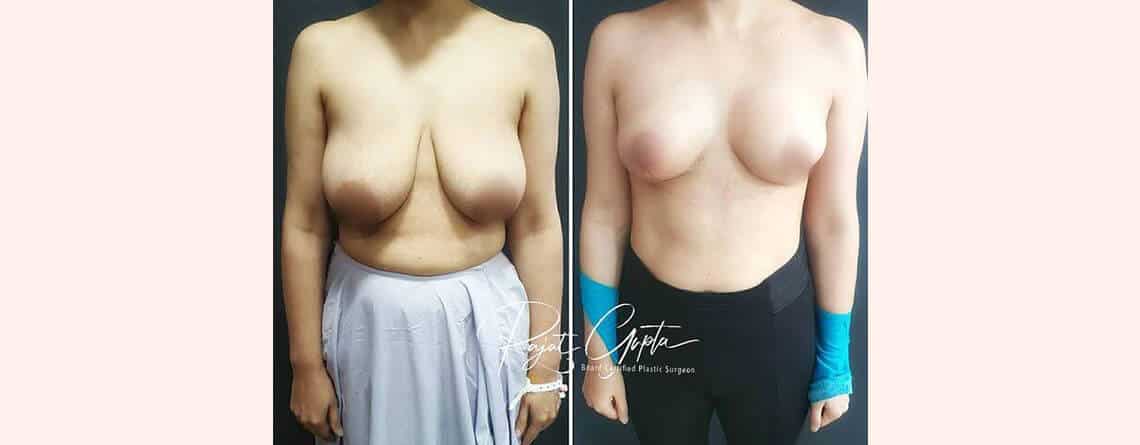
Breast Lift Surgery Techniques Compared: What Works Best?
When women begin researching breast lift surgery in Delhi, one question appears almost immediately:
Which breast lift technique is the best?
The honest answer is more nuanced than most online articles suggest. There is no single “best” technique. Breast lift surgery is not a standardised operation. It is a customised reshaping procedure where the surgical method depends entirely on how the breast has changed over time.
Pregnancy, weight fluctuations, ageing, genetics, and skin elasticity all influence breast shape differently. The role of an experienced plastic surgeon in Delhi is to match the technique to the anatomy rather than forcing every patient into the same surgical pattern.
To understand this properly, you need to know what each technique actually does, how it is performed, and what kind of results it is designed to achieve.
What a Breast Lift Actually Corrects?
Before comparing techniques, it helps to clarify what a breast lift is meant to address.
A breast lift restores position and proportion by:
- removing excess stretched skin
- reshaping internal breast tissue
- repositioning the nipple–areola complex higher on the chest
- improving firmness and contour without necessarily increasing size
Unlike augmentation, breast lift surgery in Delhi focuses primarily on reshaping rather than enlargement. The amount of sagging, medically called ptosis, determines which surgical approach becomes appropriate.

Have questions or want to get started? We are ready to help you with a smile!
Crescent Lift Technique (Minimal Lift)
The crescent lift is the least invasive breast lift option and is suitable only for very mild sagging.
How the procedure is performed
A small crescent-shaped segment of skin is removed from the upper border of the areola. The nipple is lifted slightly as the skin is tightened.
Who it suits
This technique may work when:
- nipple position is only slightly low
- skin laxity is minimal
- patients want subtle refinement rather than major correction
Advantages
- minimal scarring limited to the areolar edge
- shorter surgery duration
- quicker early recovery
Limitations
The lift achieved is modest. Patients expecting dramatic reshaping may feel undercorrected. In modern Breast lift in India, crescent lifts are used selectively rather than routinely.
Periareolar Lift (Donut Lift)
Also called the donut lift, this technique is often chosen for mild to moderate sagging.
Surgical approach
A circular incision is made around the areola. Excess skin is removed in a ring pattern, allowing the surrounding tissue to tighten.
What it corrects
- mild drooping
- enlarged areolas
- slight asymmetry
Why surgeons use it
The scar blends into the areolar border, making it less noticeable over time.
Important considerations
Because tightening occurs around one central point, excessive tension can flatten the breast if used in unsuitable cases. This is why experienced planning matters in breast lift surgery in Delhi.
Vertical Lift Technique (Lollipop Lift)
The vertical lift represents one of the most commonly used modern techniques because it balances effective lifting with controlled scarring.
How surgery is performed
Incisions include:
- a circular incision around the areola
- a vertical incision extending downward to the breast crease
This allows significant reshaping without the longer horizontal scar of older methods.
What it achieves
- meaningful elevation of the nipple
- improved projection
- reshaping of breast tissue internally
- reduction of excess skin vertically
Why it is widely preferred
Vertical techniques allow surgeons to sculpt the breast from within, not just tighten the skin surface. Many advanced results seen in breast lift in India today rely on variations of this approach.
Anchor Lift Technique (Inverted-T Lift)
For moderate to severe sagging, the anchor lift remains the most powerful and reliable method.
Surgical design
Incisions include:
- around the areola
- vertically downward
- along the breast crease
Together, these create an anchor-shaped pattern.
When it becomes necessary
This technique is chosen when:
- significant skin excess exists
- breasts have lost substantial firmness
- nipples sit well below the breast fold
- post-pregnancy or post-weight-loss changes are extensive
Advantages
- maximum reshaping control
- improved long-term support
- ability to remove larger amounts of skin safely
Although scars are longer, modern closure techniques used by an experienced plastic surgeon in Delhi help scars fade considerably over time.
Auto-Augmentation Breast Lift (Volume Redistribution Technique)
One of the more modern developments involves using the patient’s own breast tissue to create upper fullness without implants.
How it works
Instead of removing tissue alone, internal breast tissue is repositioned upward and secured to create projection.
Benefits
- improved fullness in the upper breast
- natural feel without implants
- long-lasting contour support
This technique is increasingly popular among patients seeking natural results through breast lift surgery in Delhi without augmentation.
Breast Lift with Implants (Hybrid Approach)
Some patients have both sagging and volume loss. In such cases, lifting alone may restore position but not fullness.
Combined procedure
The surgeon performs:
- breast lift to reposition tissue
- implant placement to restore volume
When recommended
- deflation after pregnancy or weight loss
- desire for upper pole fullness
- significant volume reduction over time
Careful planning ensures implants complement the lift rather than overstretching tissues again.
How Surgeons Choose the Right Technique
Technique selection is less about preference and more about anatomy. During consultation for breast lift surgery in Delhi, surgeons evaluate:
- nipple position relative to the breast fold
- skin elasticity
- breast volume distribution
- degree of sagging
- long-term stability goals
A responsible approach avoids choosing smaller-scar techniques when stronger structural correction is needed.
Recovery Differences Between Techniques
Recovery timelines overlap but vary slightly depending on surgical extent.
Generally:
- mild lifts recover faster in early weeks
- larger lifts involve more swelling initially
- internal healing continues for several months regardless of technique
Patients across breast lift in India procedures usually return to routine activities within one to two weeks, with gradual improvement thereafter.
Scar Patterns: Understanding the Trade-Off
A key principle patients often discover is this:
Greater lift requires greater access.
In practical terms:
- smaller lifts mean smaller scars, but limited correction
- stronger lifts involve longer scars but more dramatic improvement
Modern scar placement focuses on concealment and natural fading rather than unrealistic scar elimination promises.
Long-Term Results Across Techniques
Longevity depends less on technique name and more on:
- tissue quality
- surgical precision
- weight stability
- ageing processes
When properly planned, breast lift surgery in Delhi delivers results that remain stable for many years, though natural ageing continues.
How to Choose the Right Technique?
Choosing a breast lift technique is not about selecting a trend. It is about understanding how your body has changed and selecting a method that restores balance safely and naturally.
A detailed consultation with Dr Rajat Gupta will get you a careful evaluation of breast structure, skin quality, and long-term goals so the chosen approach supports comfort, confidence, and stability rather than short-term visual improvement alone.
Book your session now!
FAQs About Breast Lift Surgery Techniques
Crescent and periareolar lifts involve fewer scars but are suitable only for mild sagging. Larger corrections require vertical or anchor techniques for stable long-term results.
No. Despite newer techniques, anchor lifts remain the gold standard for significant sagging because they provide maximum reshaping control and predictable outcomes.
Yes. Auto-augmentation techniques used in Breast lift in India can restore shape using existing tissue, creating natural fullness without implants.
Recovery differences are usually modest. Healing depends more on surgical extent and individual response than on incision pattern alone.
The complexity of reshaping and operating time can influence overall pricing, which is why consultation with a plastic surgeon in Delhi is necessary for accurate estimates.
Results are long-lasting but not immune to ageing, gravity, or hormonal changes. Proper technique selection helps results age more gracefully.

Dr. Rajat Gupta
MBBS, MS, DNB(Gen. Surg.),
DNB (Plastic Surgery)
Dr. Rajat Gupta is a board certified plastic surgeon in India with 18+ years of experience to back his expertise in the domain of aesthetic surgeries.
Having completed his training from Maulana Azad Medical College and equipped with a thorough understanding of aesthetic needs of people, Dr. Gupta strives to offer the best remedies and cosmetic procedures outfitted with the latest technology to the aspirants in India and across the globe. To book an appointment, call: +91-9251711711 or email: [email protected]
Share this post

Related Posts

Perky & Proud: How to Keep Your Breasts Looking Their Best
Every woman desires youthful, perky breasts that enhance confidence and body image.... read more

How Can I Get Scarless Breast Lift Surgery?
Beautiful breasts need not be big. They may be of any size.... read more

The Procedure of Breast Lift
A breast lift surgery is also known as Mastopexy. This procedure is... read more

How to Make Your Breasts Perkier?
Imagine waking up each day, looking in the mirror, and feeling confident... read more

What is the Nominal Breast Lift Price in India?
Breast lift is a cosmetic procedure many people opt to correct sagging... read more

New Breast Lift Surgery Techniques
If you are looking for a permanent solution to sagging breasts, a... read more

Top-Rated Surgeons for Breast Lift Surgery in Mumbai
Mumbai is home to some of India’s most experienced plastic surgeons, especially... read more

How painful is a Breast Lift?
Are you considering a breast lift procedure but scared of the pain?... read more

Complete Guide to Breast Lift Procedure
Breast beauty goes beyond simple size considerations. A trained cosmetic surgeon can... read more

Can I Get a Breast Lift and a Tummy Tuck at the Same Time?
Combining a breast lift with a tummy tuck, often referred to as... read more