At RG Aesthetics, we believe in advancing the field of cosmetic surgery—not just through practice, but by sharing what we’ve learned.
Our popular and very sought after fellowship program, which now sees a two year waiting list, reflects our commitment to teaching the finer nuances of aesthetic surgery to plastic surgeons around the country. Publishing our research is a natural extension of this effort.
By documenting and publishing our unique techniques and refinements in cosmetic surgery, we aim to make them accessible to peers worldwide—contributing to global best practices and supporting fellow surgeons in delivering safer, more precise, and patient-centric outcomes.
Explore our growing repository of research—each paper adding to the global dialogue on elevating standards in aesthetic care.

Beyond Weight: Analyzing the Relationship Between Weight of Tissue Removal and Cup Size Change in Breast Reduction
This study evaluated the relationship between the weight of breast tissue removed during reduction mammoplasty and the resulting postoperative cup size in 184 patients.
The findings revealed that tissue weight alone is not a reliable predictor of postoperative cup size. Patients with similar amounts of tissue removed often achieved different cup size reductions, highlighting the influence of factors such as breast density, tissue composition, anatomical variations, skin characteristics, and individual patient anatomy on the final result.
The study underscores the importance of moving beyond weight-based calculations when planning breast reduction surgery. Instead, it advocates for a personalized, patient-centred approach that combines detailed anatomical assessment, comprehensive preoperative counselling, and surgical expertise to achieve optimal functional and aesthetic outcomes while setting realistic expectations.
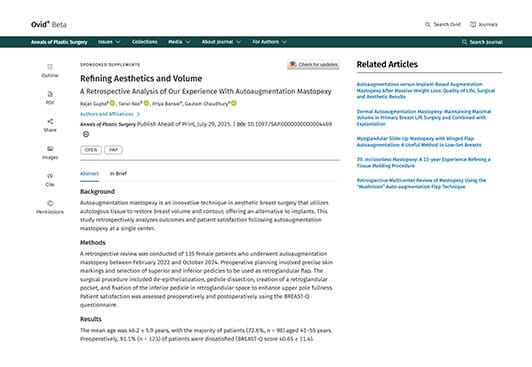
Refining Aesthetics and Volume
A Retrospective Analysis of Our Experience With Autoaugmentation Mastopexy
We are delighted to share that our latest research paper, "Refining Aesthetics and Volume: A Retrospective Analysis of Our Experience With Autoaugmentation Mastopexy," has been published in Annals of Plastic Surgery, one of the leading peer-reviewed journals in the field of plastic and reconstructive surgery.
This study analyzes the outcomes of 135 patients who underwent Autoaugmentation Mastopexy, a technique that uses a patient's own breast tissue to restore volume, improve shape, and enhance upper pole fullness without the use of implants.
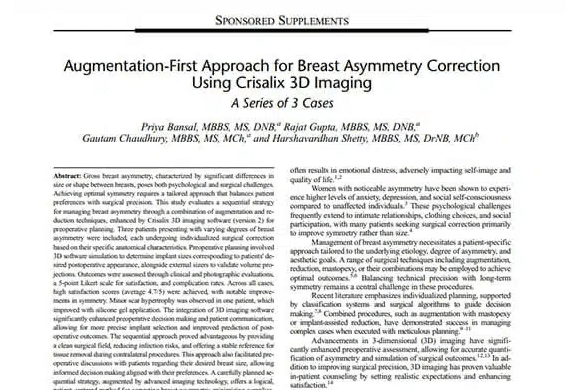
Augmentation-First Approach for Breast Asymmetry Correction Using Crisalix 3D Imaging
This research paper focuses on the surgical correction of breast asymmetry, a condition that affects both physical appearance and confidence. It introduces an augmentation-first approach, where the smaller breast is enhanced first to guide better symmetry. Advanced 3D imaging is used to improve planning, simulate outcomes, and align results with patient expectations. The study demonstrates high patient satisfaction, improved symmetry, and minimal complications.
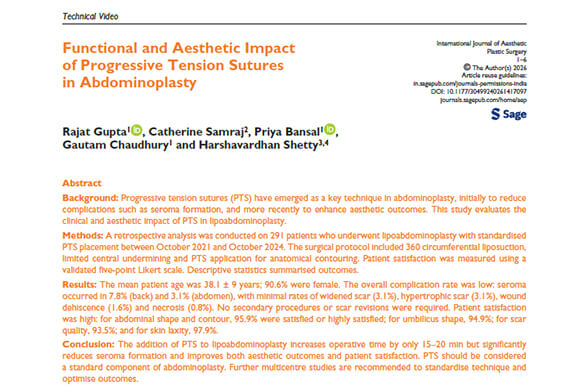
Functional and Aesthetic Impact of Progressive Tension Sutures in Abdominoplasty
This study evaluates the role of progressive tension sutures in lipoabdominoplasty, focusing on both functional and aesthetic outcomes. In a retrospective analysis of 291 patients, the use of standardized progressive tension sutures significantly reduced seroma formation while improving abdominal contour, waist definition, umbilical aesthetics, and scar quality. The technique added minimal operative time and showed low complication rates with high patient satisfaction. The findings support progressive tension sutures as an important component of modern abdominoplasty.
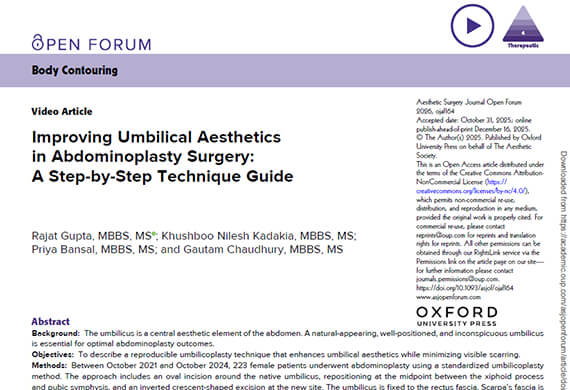
Improving Umbilical Aesthetics in Abdominoplasty Surgery: A Step-by-Step Technique Guide
This paper presents a standardized and reproducible umbilicoplasty technique designed to achieve a natural looking, well positioned umbilicus with minimal visible scarring during abdominoplasty. In a series of 223 female patients, the technique consistently produced a small, vertically oriented umbilicus with superior hooding and a concealed scar. Patient satisfaction was high, with no cases of umbilical stenosis or necrosis, highlighting the technique as a reliable method for enhancing umbilical aesthetics in abdominoplasty surgery.
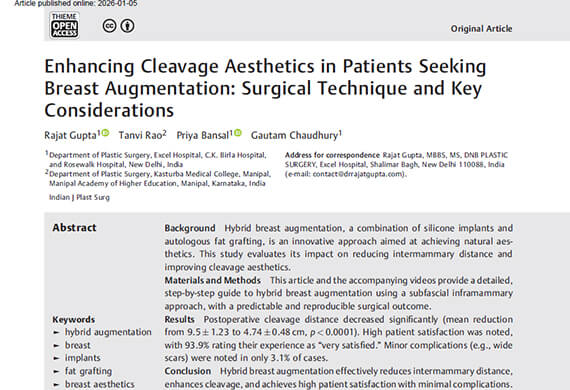
Enhancing Cleavage Aesthetics in Patients Seeking Breast Augmentation
This paper describes a hybrid breast augmentation technique that combines silicone implants with targeted autologous fat grafting to improve cleavage aesthetics. The approach addresses limitations of implant-only augmentation by reducing intermammary distance and creating a smoother, more natural medial breast contour. In a series of 131 patients, the technique resulted in a significant reduction in cleavage distance, high patient satisfaction, and minimal complications, demonstrating a reliable and reproducible method for achieving enhanced and natural-looking cleavage.
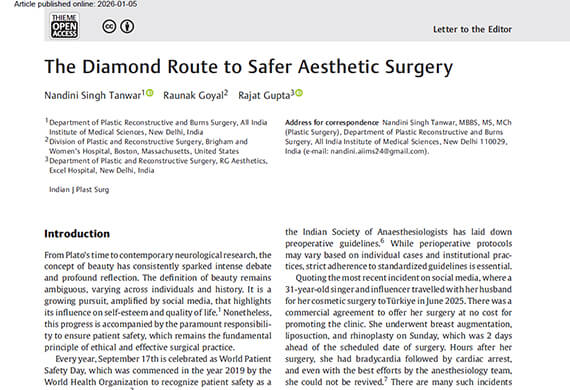
The Diamond Route to Safer Aesthetic Surgery
This paper highlights the growing importance of patient safety in aesthetic surgery amid rising procedure volumes and commercialization. It introduces the ISAPS Four Diamond Factors framework, focusing on appropriate procedure selection, thorough patient evaluation, qualified surgeons, and accredited surgical settings to minimize preventable complications. By drawing attention to recent adverse events and ethical concerns, the article emphasizes strict adherence to standardized protocols and informed decision making. The Diamond framework serves as a practical guide to improving safety, accountability, and trust in aesthetic surgical practice.
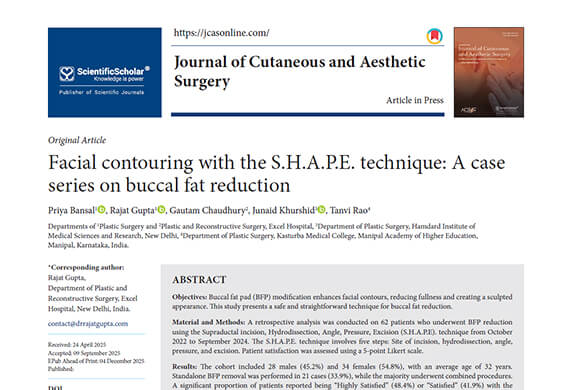
Facial Contouring with the S.H.A.P.E. Technique: A Case Series on Buccal Fat Reduction
This paper presents the S.H.A.P.E. technique as a structured and reproducible approach to buccal fat pad reduction for facial contouring. The method simplifies the procedure into five defined steps, improving safety, precision, and consistency. In a series of 62 patients, most reported high satisfaction with enhanced midface definition and facial balance. Complications were minimal and limited to mild, temporary swelling. The technique emphasizes conservative fat excision to avoid overcorrection and achieve natural looking results.
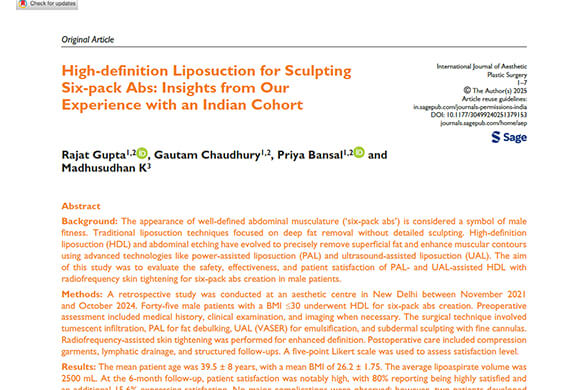
High-definition Liposuction for Sculpting Six-pack Abs: Insights from Our Experience with an Indian Cohort
This study evaluates the safety and effectiveness of high definition liposuction using power assisted and ultrasound assisted techniques combined with radiofrequency skin tightening for six pack abs creation in male patients. In a series of 45 patients with a BMI of 30 or less, the technique delivered precise abdominal sculpting with high patient satisfaction. Most patients were satisfied or highly satisfied at six months, with minimal complications, demonstrating that high definition liposuction is a safe and reliable option for achieving well defined abdominal contours.
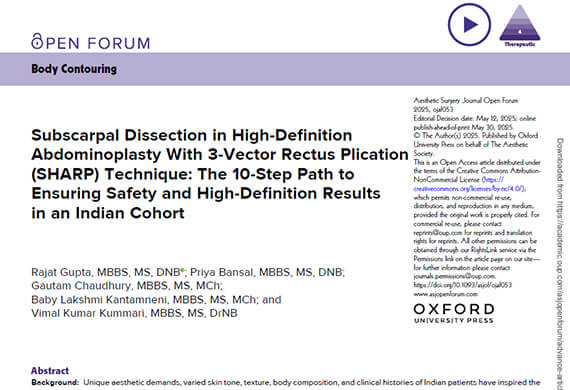
Subscarpal Dissection in High-Definition Abdominoplasty With 3-Vector Rectus Plication (SHARP) Technique
This paper presents the SHARP technique, a structured 10 step approach to high definition abdominoplasty tailored to the Indian patient population. In a prospective series of 128 patients, the technique combined subscarpal dissection, 360 degree liposuction, and three vector rectus plication to achieve improved contour and waist definition. Complication rates were low, with seroma being the most common, and overall patient satisfaction was very high. The study supports SHARP as a safe, reproducible, and effective method for high definition abdominoplasty.
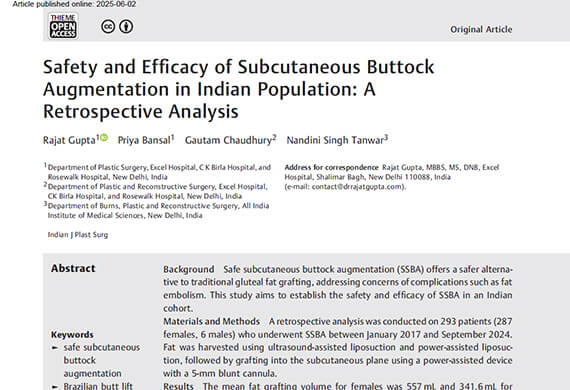
Safety and Efficacy of Subcutaneous Buttock Augmentation in Indian Population
This study evaluates the safety and effectiveness of safe subcutaneous buttock augmentation as an alternative to traditional gluteal fat grafting. In a retrospective analysis of 293 patients, fat was grafted strictly in the subcutaneous plane using power assisted and ultrasound assisted techniques, resulting in significant improvement in waist to hip ratio and overall body contour. There were no reported mortalities and complications were minimal. The findings support this technique as a safe, reliable, and aesthetically effective option for buttock enhancement in the Indian population.
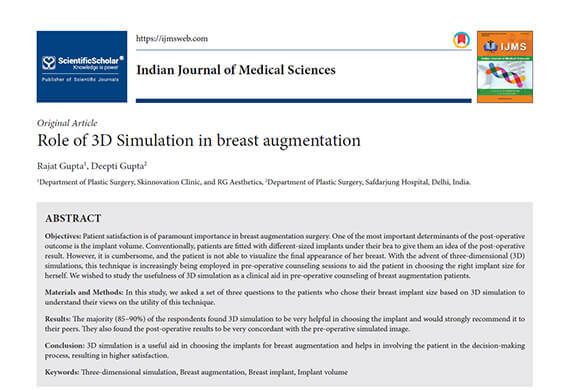
Role of 3D Simulation in Breast Augmentation
This study evaluates the usefulness of three dimensional simulation as a tool in preoperative counselling for breast augmentation. In a series of 94 patients, most found 3D simulation highly helpful in selecting implant size and understanding expected outcomes. Nearly 90 percent felt the postoperative results closely matched the simulated images, and the majority would strongly recommend its use. The study highlights 3D simulation as an effective method to involve patients in decision making and improve satisfaction in breast augmentation surgery.
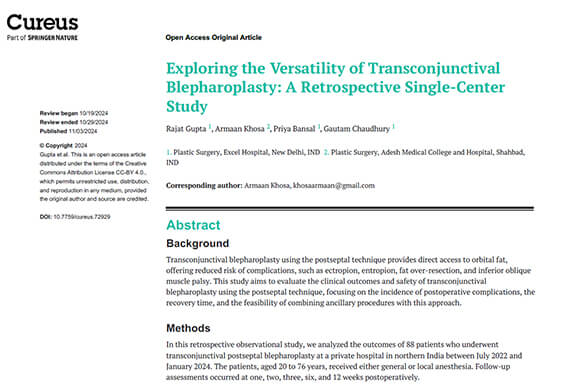
Exploring the Versatility of Transconjunctival Blepharoplasty: A Retrospective Single-Center Study
This study evaluates the safety, outcomes, and versatility of transconjunctival postseptal blepharoplasty in 88 patients undergoing lower eyelid rejuvenation. The technique provided effective access to orbital fat while minimizing complications such as lid retraction, ectropion, and visible scarring. Ancillary procedures including skin pinch excision, canthopexy, and fat grafting were safely combined when indicated. Most patients experienced mild, short-lived postoperative swelling and bruising, with rapid recovery and high satisfaction, supporting this approach as a reliable and flexible option for lower eyelid surgery.
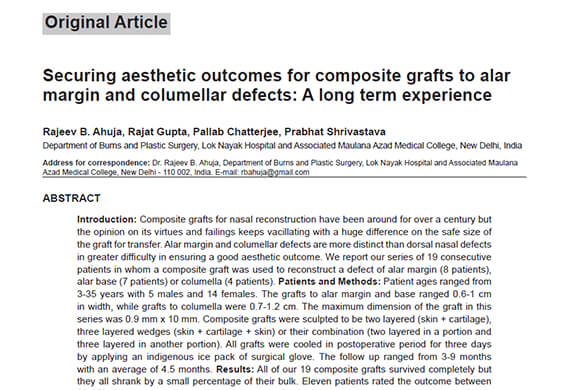
Securing Aesthetic Outcomes for Composite Grafts to Alar Margin and Columellar Defects: A Long-Term Experience
This paper reviews long term experience with composite grafts for reconstruction of alar margin, alar base, and columellar defects. In a series of 19 patients, all composite grafts survived completely, with only minimal graft shrinkage and no cases of graft loss. Most patients reported high aesthetic satisfaction, although mild pigmentation changes were observed in some cases. The study emphasizes that limiting graft width to 1 cm, careful donor site selection, and postoperative cooling are key factors in ensuring reliable survival and good aesthetic outcomes.
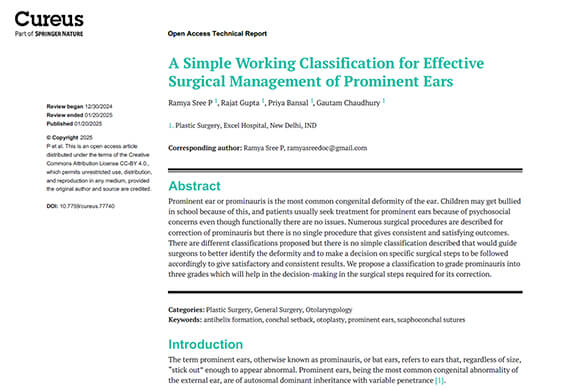
A Simple Working Classification for Effective Surgical Management of Prominent Ears
This paper presents a practical, three-grade classification system for prominent ear deformities to guide surgical decision-making. The classification is based on key anatomical factors such as increased conchomastoid angle, absence of the antihelical fold, and depth of the conchal bowl. Each grade is directly linked to specific surgical steps, ranging from conchal setback alone to combined antihelical fold creation and conchal excision. This structured approach helps achieve predictable, consistent, and aesthetically pleasing outcomes in otoplasty.
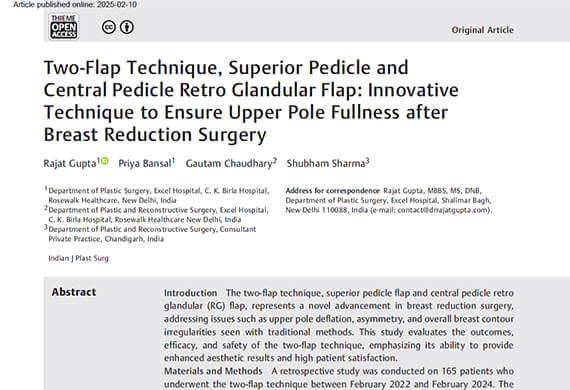
Two-Flap Technique, Superior Pedicle and Central Pedicle Retro Glandular Flap: Innovative Technique to Ensure Upper Pole Fullness after Breast Reduction Surgery
This paper describes an innovative two flap breast reduction technique designed to preserve upper pole fullness and improve overall breast aesthetics. The approach combines a superior pedicle carrying the nipple areola complex with a central pedicle retro glandular flap to provide better projection and contour. In a retrospective series of 165 patients, the technique showed high patient satisfaction, low complication rates, and consistent improvement in upper pole fullness, making it a safe and effective option for aesthetic focused breast reduction surgery.
Using Ultrasound and Power Assisted Devices through Lateral Incision: The OCCULT Technique for Gynecomastia
This large multicentric study evaluates the OCCULT technique for gynecomastia surgery, which combines ultrasound assisted and power assisted liposuction with gland removal through a single lateral chest wall incision. In 967 patients, the technique achieved high satisfaction rates, excellent chest contour, and near invisible scars with no incision on the front of the chest. Complication rates were very low, with no cases of nipple areola necrosis. The study supports OCCULT as a safe, reproducible, and aesthetically superior approach for gynecomastia correction.
Psychological Determinants of Patient Satisfaction in Aesthetic Surgery: The Impact of Preoperative Screening and Counselling
This study examines the psychological factors influencing patient satisfaction after aesthetic surgery, with emphasis on preoperative screening and counselling. In a cohort of 290 patients, the use of the Iowa Personality Disorder Screen helped identify psychological vulnerabilities such as anxiety, maladaptive traits, and unrealistic expectations. Addressing these factors through structured counselling improved satisfaction and reduced postoperative regret. The findings highlight the importance of integrating psychological assessment and support into routine aesthetic surgical practice to achieve holistic and sustainable outcomes.
Addressing the Challenging Problem of High-Riding NAC after Breast Reduction
This paper addresses the difficult aesthetic complication of a high-riding nipple–areolar complex (NAC) following breast reduction surgery. It highlights the importance of prevention through accurate preoperative marking while also presenting a novel single-stage “two-flap” mastopexy technique for correction. The technique simultaneously repositions the NAC and corrects inferior pole bottoming out without creating additional scars on the upper pole. This approach offers a practical and aesthetically acceptable solution to a challenging postoperative problem.
Impact of Reducing Intermammary Cleavage Gap on Breast Shape and Aesthetics in Hybrid Breast Augmentation: A Case Series
This study evaluates hybrid breast augmentation combining silicone implants with autologous fat grafting to improve cleavage aesthetics. In 131 patients, targeted fat grafting to the superomedial breast significantly reduced intermammary distance and enhanced breast shape. The mean cleavage gap decreased from 9.5 cm to 4.74 cm with high patient satisfaction scores and minimal complications. The findings support hybrid augmentation as a safe and reliable technique for achieving natural looking breasts with improved cleavage aesthetics.
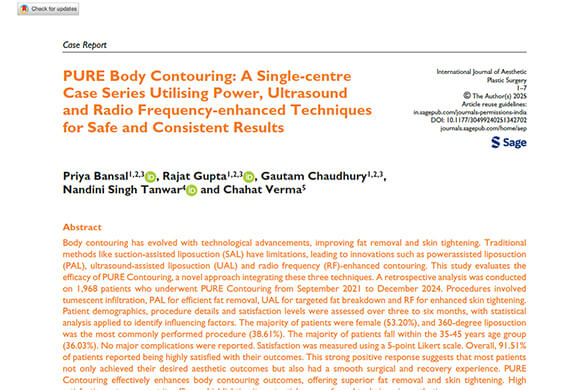
PURE Body Contouring: A Single-centre Case Series Utilising Power, Ultrasound and Radio Frequency-enhanced Techniques for Safe and Consistent Results
This study evaluates PURE body contouring, a combined approach using power assisted liposuction, ultrasound assisted liposuction, and radio frequency enhanced skin tightening. In a large single centre series of 1,968 patients, the technique delivered effective fat removal, improved skin tightening, and consistent body contouring outcomes. Most patients fell within the 35 to 45 year age group, and overall satisfaction was high, with over 91 percent reporting being highly satisfied. No major complications were observed, supporting PURE as a safe and reliable body contouring technique.
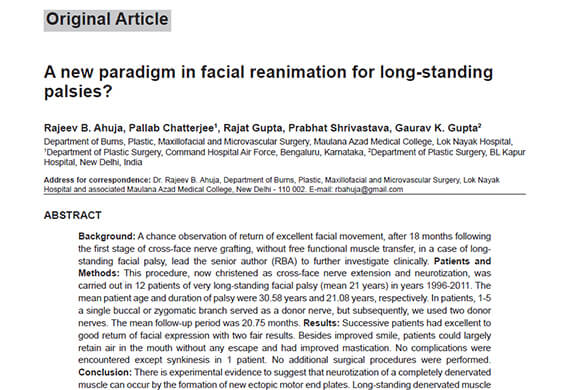
A new paradigm in facial reanimation for long-standing palsies?
This study presents a novel single-stage approach to facial reanimation using cross-face nerve extension and neurotization (CFNEN) in patients with long-standing facial palsy. Contrary to traditional beliefs, the authors demonstrate that chronically denervated facial muscles retain the ability to regenerate and regain function. In a series of 12 patients, most achieved good to excellent facial movement and smile symmetry without free muscle transfer, suggesting CFNEN as a simpler and effective alternative to multi-stage reconstruction.