
The Asian blepharoplasty procedure in Delhi is a precise eyelid surgery designed to create a natural-looking upper eyelid crease in eyes with a monolid or an indistinct fold. The goal is not to Westernize the eye, but to create a crease that complements your natural eye shape, facial proportions, and expressions.
With Dr Rajat Gupta, the procedure follows a careful, step-by-step approach focused on safety, balance, and long-term natural results.
Pre-Surgery Evaluation and Planning
Every Asian eyelid has unique anatomy. Before surgery, Dr Gupta conducts a detailed assessment that includes:
- Eyelid skin thickness and elasticity
- Presence of excess fat or puffiness
- Brow position and eyelid opening strength
- Symmetry between both eyes
- Preferred crease height and shape
The crease is marked while you are sitting upright and opening your eyes naturally. This step is critical. Even a few millimetres difference in crease height can change the final look. The planning stage ensures the eyelid fold creation technique in Delhi is customised, not standardised.
Have questions or want to get started? We are ready to help you with a smile!
Anaesthesia and Surgical Preparation
The double eyelid surgery procedure Delhi is usually performed under local anaesthesia with mild sedation. This keeps you relaxed and comfortable without the risks of full general anaesthesia in most cases.
On the day of surgery:
- The eyelids are cleaned thoroughly
- Local anaesthetic is injected to numb the area completely
- Sterile draping is done to maintain safety
You remain awake but pain-free throughout the procedure.
Step by Step: How Asian Blepharoplasty Is Done
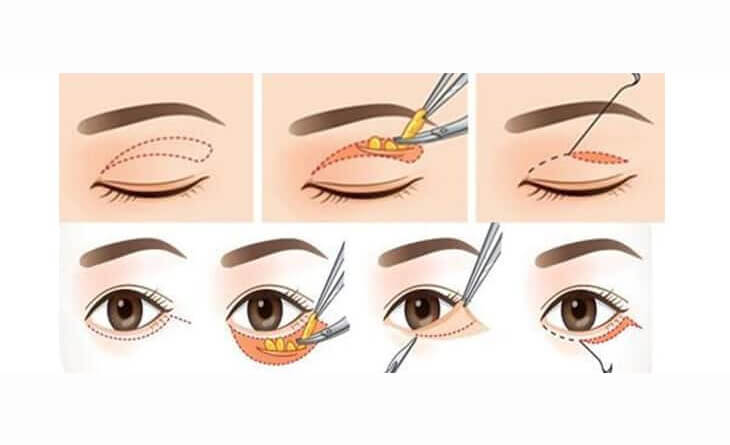
Once anaesthesia takes effect, the Asian blepharoplasty surgery steps begin.
Step 1: Crease Marking Confirmation
Before starting, the crease markings are rechecked to confirm symmetry and alignment with the eyelid movement.
Step 2: Incision or Stitch Technique
Depending on your eyelid anatomy, one of two techniques is used:
- Incision Technique:
A fine incision is made along the marked crease line. This allows removal or adjustment of excess skin and fat if needed. - Stitch Technique (Suture Method):
Small punctures are made, and sutures are placed internally to form the crease without a long incision. This is suitable for lighter eyelids with minimal excess tissue.
The choice depends entirely on eyelid thickness, skin quality, and desired durability of results.
Step 3: Crease Formation
Using precise suturing, the skin is gently anchored to the underlying eyelid lifting structure. This creates a dynamic fold that appears when the eyes open and softens when they close.
Step 4: Symmetry Check
Both eyelids are checked multiple times to ensure the fold height, depth, and shape match as closely as possible.
Step 5: Closure
Incisions, if present, are closed with very fine sutures designed to heal discreetly within the eyelid crease.
The entire Asian blepharoplasty procedure in Delhi typically takes 45 to 75 minutes.
Immediately After the Procedure
After surgery:
- Mild swelling and tightness around the eyelids is normal
- The crease may appear higher or more defined initially
- Vision may feel slightly blurred due to ointment
You are observed for a short period and can usually go home the same day with clear aftercare instructions.
Recovery and Healing Timeline
Recovery after monolid correction procedure Delhi NCR is generally smooth when instructions are followed.
- Days 1–3: Swelling and mild bruising are most noticeable
- Days 5–7: Stitch removal if incision technique was used
- Week 2: Eyes start looking softer and more natural
- Weeks 4–8: Final crease settles and blends into facial expressions
During healing, patients are advised to:
- Avoid rubbing the eyes
- Use cold compresses as instructed
- Avoid eye makeup until healing is complete
- Limit heavy screen use if eyes feel strained
The crease continues to soften over time, which is a normal and expected part of the healing process.
Final Outcome of Asian Blepharoplasty
Once healing is complete, the eyelid crease looks natural and stable. The eyes appear more open and refreshed, while still retaining ethnic identity and personal character.
The Asian blepharoplasty procedure in Delhi is designed to enhance, not alter. Friends may notice that you look more rested or expressive, without being able to pinpoint surgery.
FAQs – Asian Blepharoplasty Procedure
Most procedures take under 90 minutes, depending on the technique used.
Results are long-lasting, but in some cases, stitches may loosen over years. Incision technique offers more permanent crease formation.
Yes, this is common. Swelling makes the crease appear higher early on. It settles naturally over weeks.
No. Local anaesthesia ensures the surgery itself is painless. Mild soreness afterward is easily managed.
Incisions, if used, heal within the crease and become barely noticeable once fully healed.
Most patients return to desk work within 5–7 days, depending on swelling.

Dr. Rajat Gupta
MBBS, MS, DNB(Gen. Surg.),
DNB (Plastic Surgery)
Dr. Rajat Gupta is a board certified plastic surgeon in India with 18+ years of experience to back his expertise in the domain of aesthetic surgeries.
Having completed his training from Maulana Azad Medical College and equipped with a thorough understanding of aesthetic needs of people, Dr. Gupta strives to offer the best remedies and cosmetic procedures outfitted with the latest technology to the aspirants in India and across the globe. To book an appointment, call: +91-9251711711 or email: [email protected]