A flat, masculine chest, without a scar on the front of it. The published OCCULT technique places the incision where no one will see it.
Gynecomastia surgery, also known as male breast reduction surgery, removes the excess glandular tissue and fat that cause the male chest to appear enlarged. The goal is a flatter, firmer, naturally masculine chest contour. For most men considering gynecomastia treatment, the most important question is not only the result, but whether surgery will leave a visible scar. At this practice, in suitable cases, the published OCCULT technique avoids any scar on the front of the chest.
Gynaecomastia is common, benign, and nothing to be embarrassed about. It can result from hormonal changes, genetics, medications, or weight gain. True gynaecomastia involves firm glandular tissue that does not respond to exercise or weight loss, making gynecomastia surgery the most reliable long-term solution.
- The published OCCULT technique
- No scar on the front of the chest
- Studied in 967 patients
- ISAPS-accredited training centre

Procedure at a glance
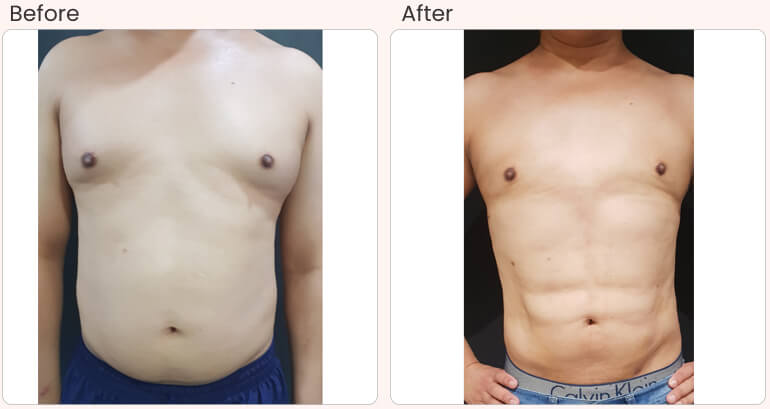
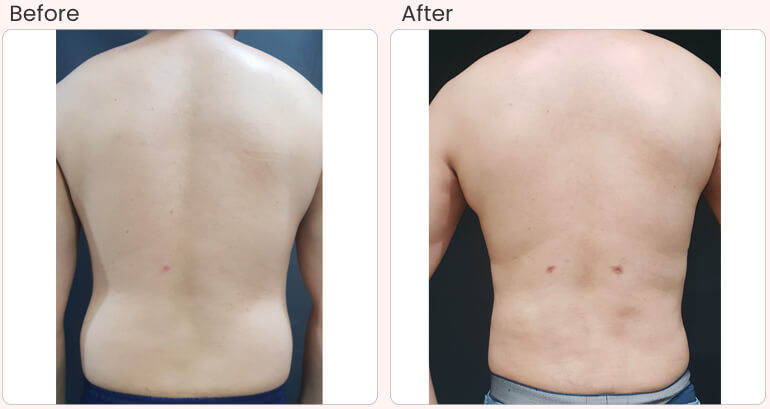
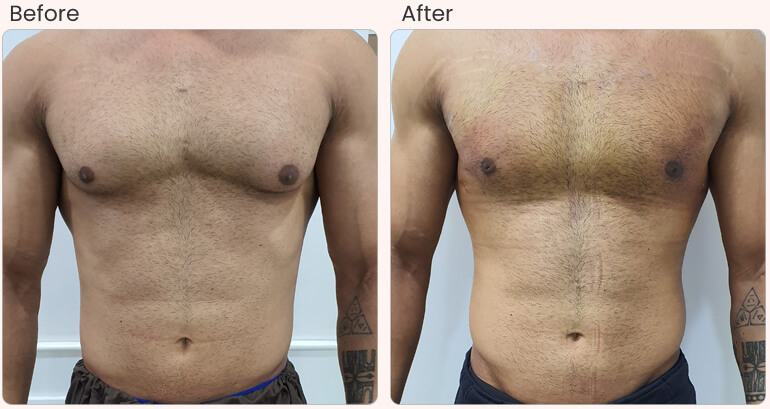
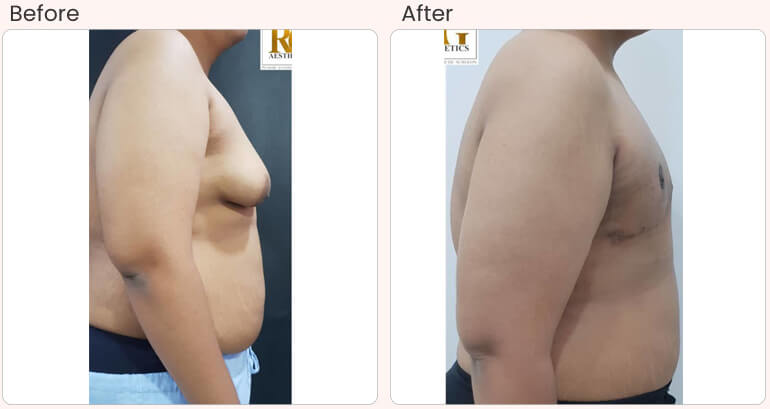
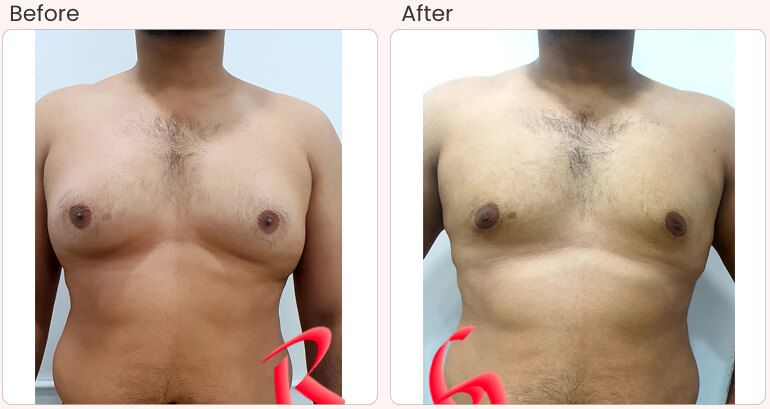
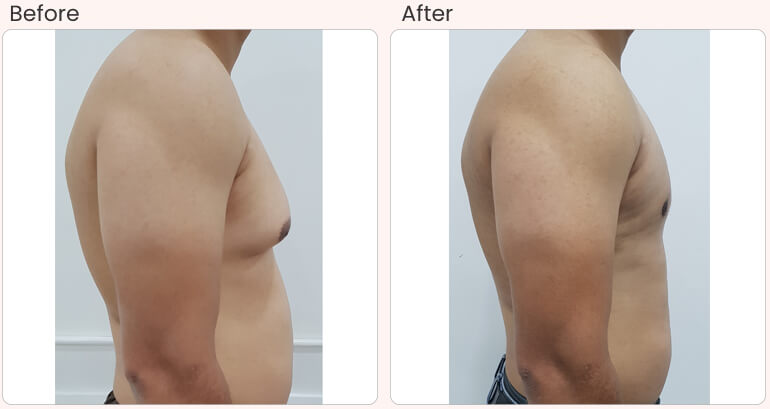
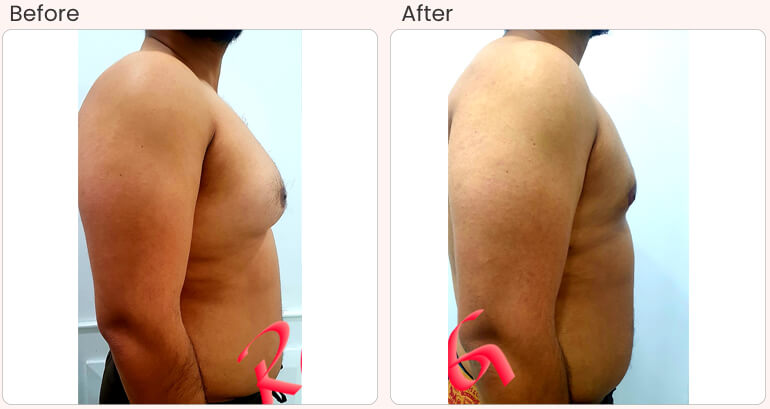
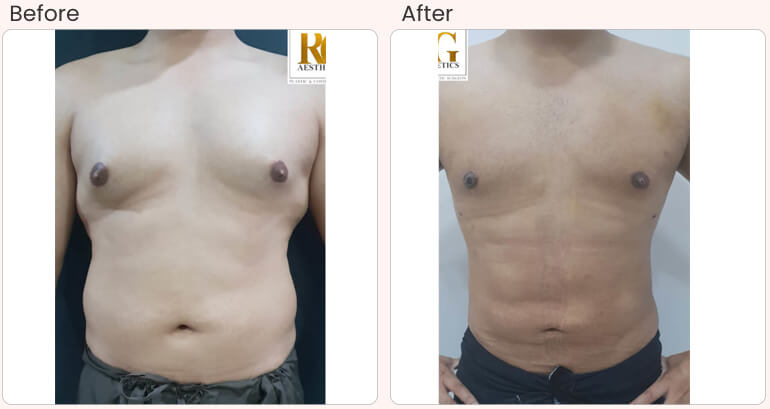
Gynecomastia Surgery Best Results / Before & After
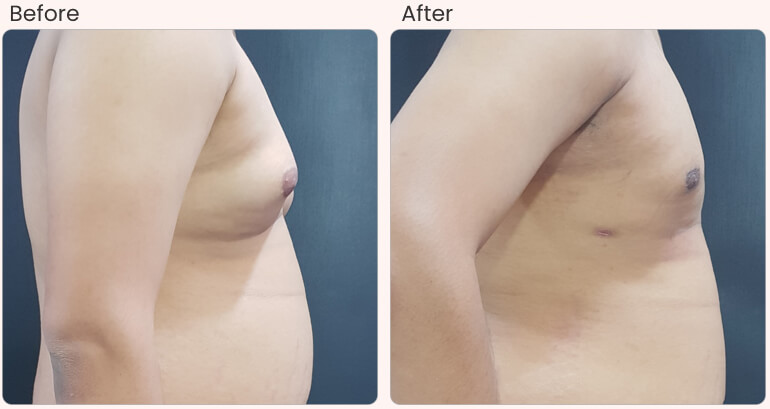
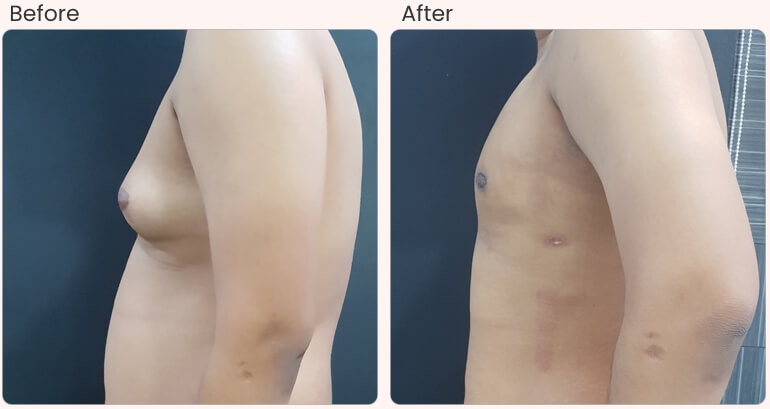
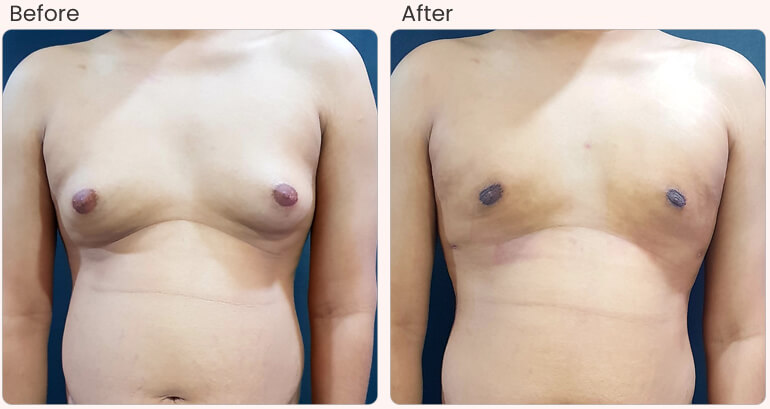
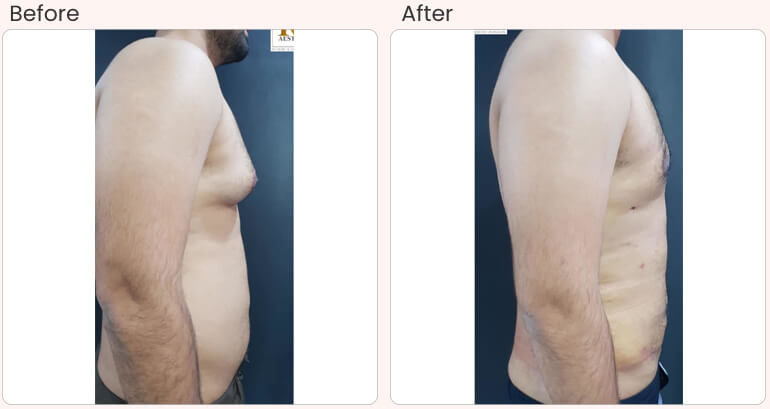
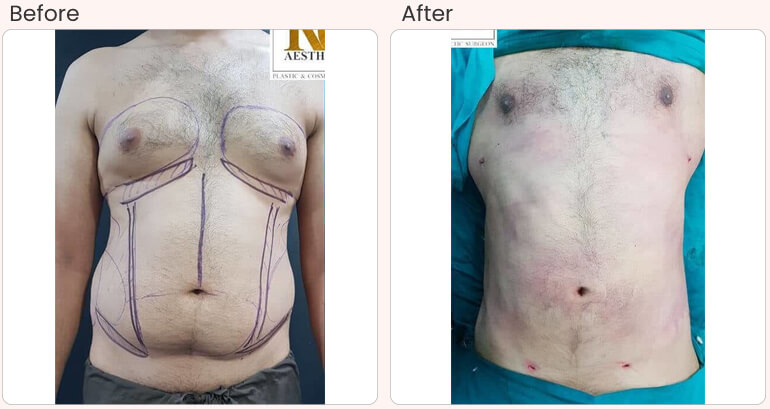
This 28 year old male was very embarrassed with his grade II gynecomastia. Here we share his results after surgery. Note no scar or cit on front of the chest!
Age: 28 year
Weight: 80
Height: 5'9"
Type: Gynecomastia correction surgery using our special technique!
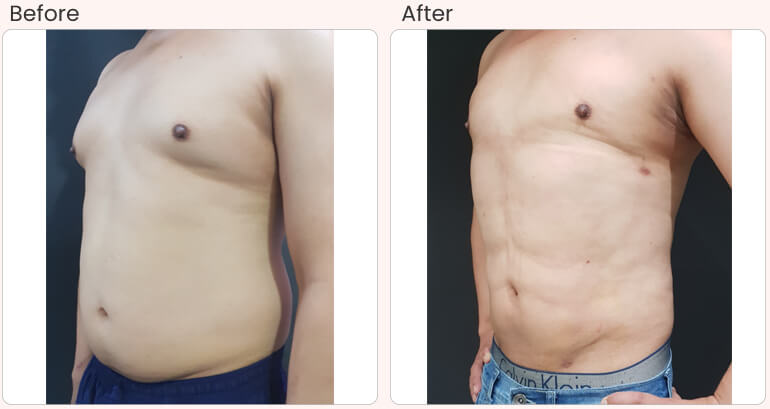


UNDERSTANDING THE CONDITION
True Gynecomastia, or Just Chest Fat?
One of the most common questions men ask is: What is the difference between gynecomastia and chest fat?
Not every enlarged male chest is true gynaecomastia. Understanding the difference is essential before considering male breast reduction.
True gynecomastia involves firm glandular tissue beneath the nipple. It often causes puffy nipples and chest fullness that remain despite dieting, weight loss, or gym workouts. In these cases, surgery is usually the only effective treatment.
Pseudogynecomastia is caused primarily by excess chest fat. Some patients improve through weight loss, exercise, or body-fat reduction, while others may benefit from liposuction alone.
Many men have a combination of gland and fat. A proper clinical examination helps determine whether gynecomastia treatment or non-surgical management is most appropriate.
Who Is a Candidate for Gynecomastia Surgery?
Gynecomastia surgery in is suitable for men in good general health who have persistent enlarged chest tissue that has not improved with exercise, weight loss, or time. It is particularly effective for men with true glandular gynaecomastia seeking a permanent solution.
Common reasons men seek male breast reduction include:
Good Candidates
Not a Candidate
A careful assessment is always performed to distinguish gynecomastia vs chest fat, as the treatment approach differs significantly.
The Grades of Gynecomastia
Gynecomastia is classified into four grades, based on the amount of enlargement and how much excess skin is present. The grade guides the surgical approach and helps set realistic expectations for the result and the scar.
| Grade | What It Looks Like | Typical Approach |
|---|---|---|
| Grade 1 | Mild enlargement around the areola, no excess skin. | Liposuction with targeted gland removal through a small lateral incision- OCCULT technique |
| Grade 2 | Moderate enlargement spreading beyond the areola, without significant loose skin. | Liposuction and gland excision, typically via the OCCULT lateral approach. |
| Grade 3 | More pronounced enlargement with moderate skin excess. | Gland excision and liposuction via the OCCULT lateral approach, with skin tightening or nipple repositioning considered. |
| Grade 4 | Severe enlargement with significant skin laxity, resembling a female breast. | More extensive surgery, sometimes including skin removal and nipple repositioning. |
Most men who consult Dr Gupta fall into Grade 1 or Grade 2, where the OCCULT technique is especially effective because there is little or no excess skin to address. Higher grades may need additional skin tightening, which is discussed honestly at consultation.
Don't take biggest decision of life
Without getting complete information!
The OCCULT Technique: A Masculine Chest Without a Front Scar
Many men searching for scarless gynecomastia surgery are actually looking for a procedure that avoids visible scars on the chest.
The OCCULT technique was developed and published by Dr Rajat Gupta to address exactly this concern. Instead of placing an incision around the nipple, a discreet lateral incision is hidden along the side of the chest. Through this approach, glandular tissue and fat can be removed using advanced ultrasound-assisted and power-assisted technology, including techniques commonly associated with VASER gynecomastia surgery.
Why Patients Prefer the OCCULT Technique?
- No visible scar on the front of the chest.
- Effective treatment for Grade 1 and Grade 2 gynecomastia.
- Natural masculine chest contour.
- Removal of both glandular tissue and excess fat.
- Faster return to normal activities.
- Published peer-reviewed evidence supporting outcomes.
A successful male breast reduction surgery should leave a flatter chest, not obvious signs that surgery was performed.
PUBLISHED RESEARCH
The OCCULT Technique Is Backed by Published Research
The OCCULT technique is not only a named approach -it is a published, peer-reviewed one, studied in a series of 967 patients. That evidence is what separates it from a marketing label: the outcomes are documented for other surgeons to read and reference, not merely asserted in advertising.
Using Ultrasound and Power Assisted Devices through Lateral Incision
What the Procedure Involves
The specifics of your gynecomastia procedure will depend on the grade and composition of the chest tissue.
Usually general anaesthesia, occasionally local anaesthesia with sedation for smaller cases.
Most procedures take 1 to 2 hours; most patients go home the same day.
The published OCCULT technique uses a discreet lateral incision combined with ultrasound-assisted and power-assisted technology. This approach is commonly associated with modern VASER gynaecomastia surgery concepts and allows removal of both gland and fat without a scar on the front of the chest.
True gynaecomastia requires removal of glandular tissue because gland cannot be eliminated by liposuction alone.
A compression vest is worn after surgery to support healing and optimise chest contour.
Most patients return home the same day following male breast reduction surgery.
Recovery: A Realistic Timeline
One reason gynecomastia surgery procedure recovery time is often viewed positively is that recovery is generally faster than patients expect.
Mild soreness, swelling, and bruising; the compression garment is worn continuously. Most return to office work within a few days and resume normal activities.
Swelling reduces noticeably and chest definition improves.
Exercise and gym activity are gradually reintroduced.
The final masculine contour appears as residual swelling resolves and scars fade.
WILL IT COME BACK?
Are the Results Permanent?
In most cases, yes. Once glandular tissue has been removed during gynecomastia surgery, it does not regenerate, making the results long-lasting.
However, significant weight gain can increase fat accumulation in the chest. Likewise, continued use of anabolic steroids, hormonal medications, or substances associated with gynecomastia can contribute to recurrence.
For this reason, identifying the underlying cause remains an important part of every gynecomastia consultation
Why be a part of RG Community?
- Get insights from our patient community
- Ask our board-certified plastic surgeon anything
- View the before-and-after patient’s results
- Connect with other patients & ask them about their experience
Don't take biggest decision of life
Without getting complete information!
Risks: An Honest Disclosure
Gynecomastia surgery is considered safe when performed by a board-certified gynecomastia surgeon, but every surgical procedure carries risks.
General risks include:
- Bleeding
- Infection
- Fluid collection (seroma)
- Delayed healing
- Anaesthetic complications
Procedure-specific considerations include:
- Minor contour irregularities
- Asymmetry between the two sides
- Temporary or permanent changes in nipple sensation
- Small areas of residual gland requiring touch-up treatment
Will Gynecomastia Surgery Leave Scars?
Traditional techniques often leave a scar around the nipple. The published OCCULT technique gynecomastia approach places the incision on the side of the chest, helping avoid visible scars on the front of the chest in appropriate candidates.
Patients with a history of keloid or hypertrophic scarring should discuss this during consultation.
A full written consent document outlining procedure-specific risks is provided before surgery.
What Gynecomastia Surgery Costs?
The gynecomastia surgery cost depends on the grade of gynecomastia, the amount of gland and fat removed, and whether additional skin tightening is required. A personalised estimate is provided during your consultation.
What Influences Cost?
- Grade of gynecomastia
- Amount of gland and fat removal required
- Need for skin tightening or skin removal
- Surgical and anaesthetic time
- Compression garments and follow-up care
WHY THIS PRACTICE?
Why Patients Choose This Practice for Gynecomastia Surgery?
- Published OCCULT Technique with no scar on the front of the chest.
- Peer-reviewed study involving 967 gynecomastia patients.
- Board-certified plastic surgeon with international fellowship training.
- Expertise in both gland removal and chest contouring.
- Honest distinction between true gynecomastia and chest fat.
- Advanced ultrasound-assisted and power-assisted technology.
- Written surgical plan covering recovery, risks, technique, and cost.
- Complete privacy and discretion throughout treatment.
Frequently Asked Questions About Gynecomastia Surgery
The gynecomastia surgery cost typically ranges from INR 60,000 to INR 2,50,000 depending on the grade and complexity of the condition. A personalised quote is provided after examination.
The published OCCULT technique gynecomastia approach places the incision on the side of the chest rather than the front, helping keep scars discreet and hidden.
Mild pubertal gynecomastia may resolve naturally. However, established glandular gynecomastia in adults does not disappear with exercise or weight loss and usually requires surgery.
Exercise can reduce chest fat but cannot remove glandular breast tissue. This is why many men with true gynecomastia continue to see chest fullness despite regular workouts.
Results are generally permanent because the gland is removed. Significant weight gain, anabolic steroid use, or ongoing hormonal causes may increase the risk of recurrence.
Most patients describe discomfort as mild to moderate, similar to muscle soreness after an intense chest workout. Pain is controlled with medication.
Most patients return to work within 2–7 days. Exercise is usually resumed gradually after 4–6 weeks, with final results appearing over several months.
Insurance coverage is uncommon because the procedure is generally considered cosmetic. Certain medically related cases may qualify depending on the policy.
The OCCULT technique is a published approach developed by Dr Rajat Gupta that removes gland and fat through a hidden lateral incision, leaving no scar on the front of the chest.
What to Expect at Your First Consultation?
Your gynecomastia consultation includes:
- Detailed discussion of your concerns and medical history.
- Assessment of whether you have true gynecomastia, chest fat, or both.
- Grading of the condition and treatment planning.
- Discussion of the OCCULT technique and expected results.
- Review of recovery, risks, and long-term outcomes.
- Personalised cost estimate and EMI options.
There is no pressure to make a decision during the consultation. The goal is to help you understand your options clearly.
Book a Detailed Consultation
A consultation with Dr Gupta is the beginning of a conversation, not a transaction. It is private, straightforward, and without pressure.